
They’ve adorned everyone from Elvis Presley to Strider Wasilewski. The Hawaiian Shirt (or Aloha shirt as it’s known in the islands) is the islands’ most recognisable cultural export. But what’s its deal?
Who invented it? Who’s making money off it? What does it really represent? Is it authentic? Or is it just another dastardly act of capitalist cultural appropriation? With Gucci flogging off Italian-made versions of the classic islands print for $AUD1585 a pop it’s a pertinent time to ask.
Hawaiian WSL commentator and graduate of the bastion of native Hawaiian culture that is Kamehameha high school, Kaipo Guerrero, played a straight bat when we put it to him:
“Downtown all the business men wear Aloha shirts instead of suits. It’s our formal wear. In school Friday is Aloha Friday and you wear Aloha shirts on Friday. It’s just our dress up gear,” he told Tracks, via Instagram.
As for whether it’s an acknowledgment or an affront to native Hawaiian culture, Kaipo wasn’t touching it with a ten foot SUP paddle.
The Cambridge Dictionary defines cultural appropriation as: the act of taking or using things from a culture that is not your own, especially without showing that you understand or respect this culture.
Making an exorbitant profit off the sale of Hawaiian shirts, many of which are made, audaciously, outside of the islands, would seem a cut and dry case of cultural appropriation. And would in turn require some serious thought from all us conscientious consumers as to whether we’d want to continue supporting it.
But there is also an argument that the Hawaiian shirt itself might qualify as an act of cultural appropriation.
The garment might be named in honour of the Hawaiian islands and use its native tongue in its alt. title (Aloha), but it was a business savvy Chinese-Hawaiian economics graduate from Yale University (on the American mainland), Ellery Chun, who came up with and copyrighted the phrase “Aloha Shirt,” back in 1936, when he started selling them out of his family’s Dry Good’s store in Honolulu.
The shirt was made of Japanese Yukata cloth and featured “tropical designs” drawn up by his sister, Ethel, with Chun telling the Honolulu Star Bulletin in 1936, “They were a novelty item at first but I could see they had great potential.”
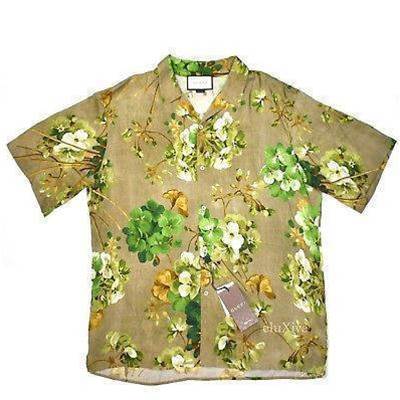
From there it was WWII veteran and anglosaxon, Alfred Sheehan, who pushed the Aloha shirt into mass production, hiring a team of local (though it’s not specified whether they were native Hawaiians) to design motifs that included Japanese, Chinese and Hawaiian imagery. By 1959 he had 400 employees and had generated over $US4 million in profits from the garment.
Since then versions of the shirt have been manufactured around the world and worn by everyone from American presidents Harry Truman and Richard Nixon down to our very own World Surf League commentary team during the Hawaiian leg of the tour.
Interestingly, the Hawaiian-born and famously politically correct former-US President, Barack Obama, declined to wear an Aloha shirt at the 2011 Asia Pacific Economic Cooperation (APEC) forum held in Honolulu – an event where world world leaders typically pose for a photo wearing an article of clothing that represents the host nation.
Obama chose to break that tradition but, in typical fence-sitting style, didn’t specify why
"I got rid of the Hawaiian shirts because I looked at pictures of some of the previous APEC meetings and some of the garb that appeared previously and I thought this might be a tradition that we might want to break," Obama said late Sunday. "I suggested to leaders, we gave them a shirt and I promise you if they wanted to wear it that would have been fine but I didn't hear a lot of complaints about breaking precedent.”
The multicultural origins and motifs represented on the Hawaiian shirt are said to symbolise the islands’ multicultural history, which, some say, justifies the name ‘Hawaiian Shirt.’ Though it must be pointed out Hawaii’s multicultural history only began after the United States Military invaded the archipelago in 1893 and overthrew the constitutional monarchy. At which point the islands became a “white planter outpost, providing missionary-descended sugar barons in the islands and imperialist Americans on the continent with a military watering hole in the Pacific,” writes the international indigenous people’s advocate, Cultural Survival .
While they don’t mention the Hawaiian Shirt, the commodification of several other forms of Indigenous Hawaiian culture has become an increasingly hot topic over the years.
“The hula, for example, an ancient form of dance with deep spiritual meaning, has been made ornamental, a form of exotica for the gaping tourist. Far from encouraging a cultural revival, as tourist industry apologists contend, tourism has appropriated and cheapened our dance, music, language, and people, particularly our women. Burdened with commodification of our culture and exploitation of our people, Hawaiians now exist in an occupied country whose hostage people are forced to witness, and for many of us to participate in, our collective humiliation as tourist artifacts for the world's rich,” it writes (https://www.culturalsurvival.org/publications/cultural-survival-quarterly/struggle-hawaiian-sovereignty-introduction).
Whether the Hawaiian shirt is actually a Haole shirt, remains contested but for common sense’s sake, you’d hope at least your Hawaiian shirt was made in the islands and that somewhere along the chain the sales and manufacturing of the garment benefitted the traditional landowners. – Jed Smith