Lightbox: Issue 595

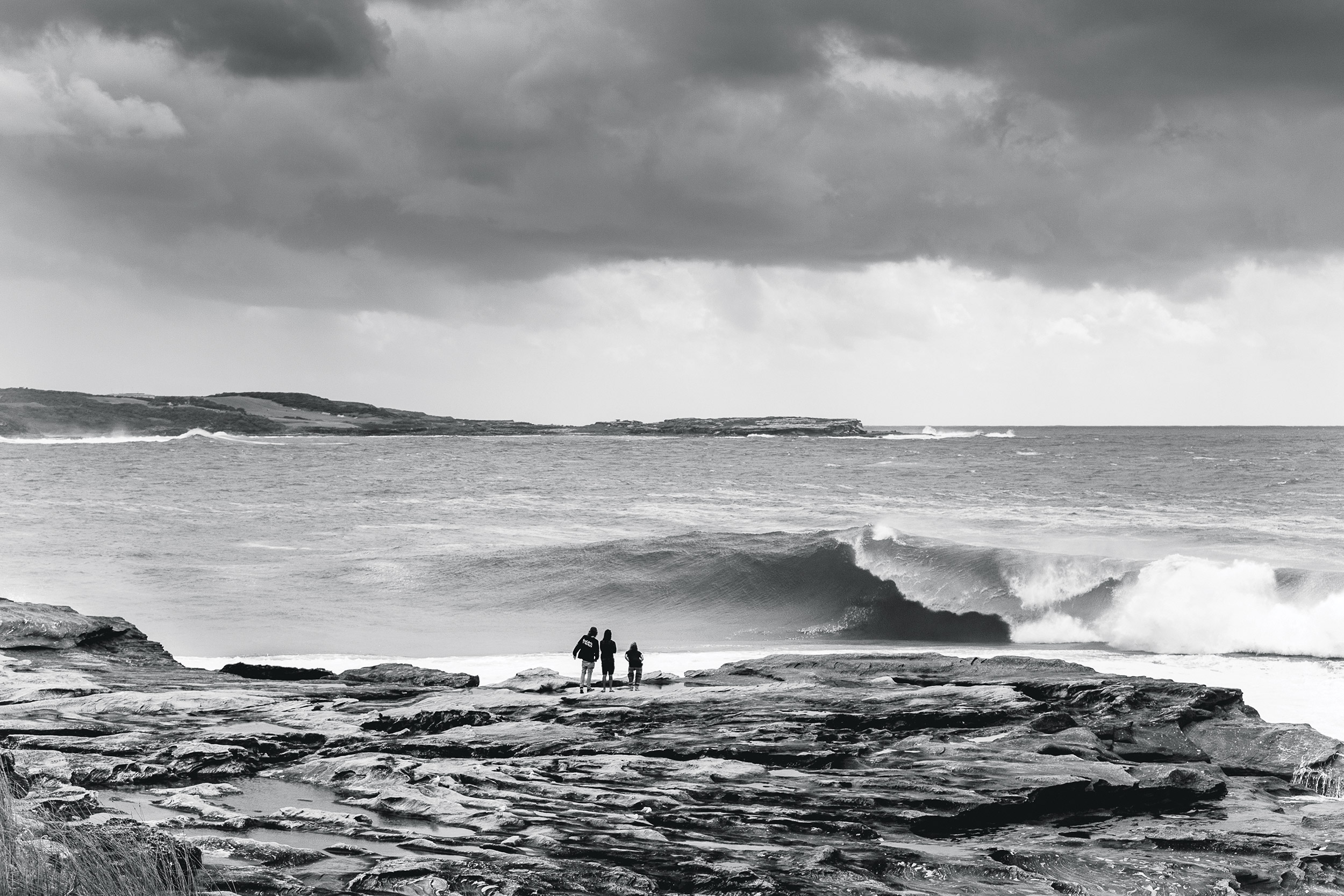
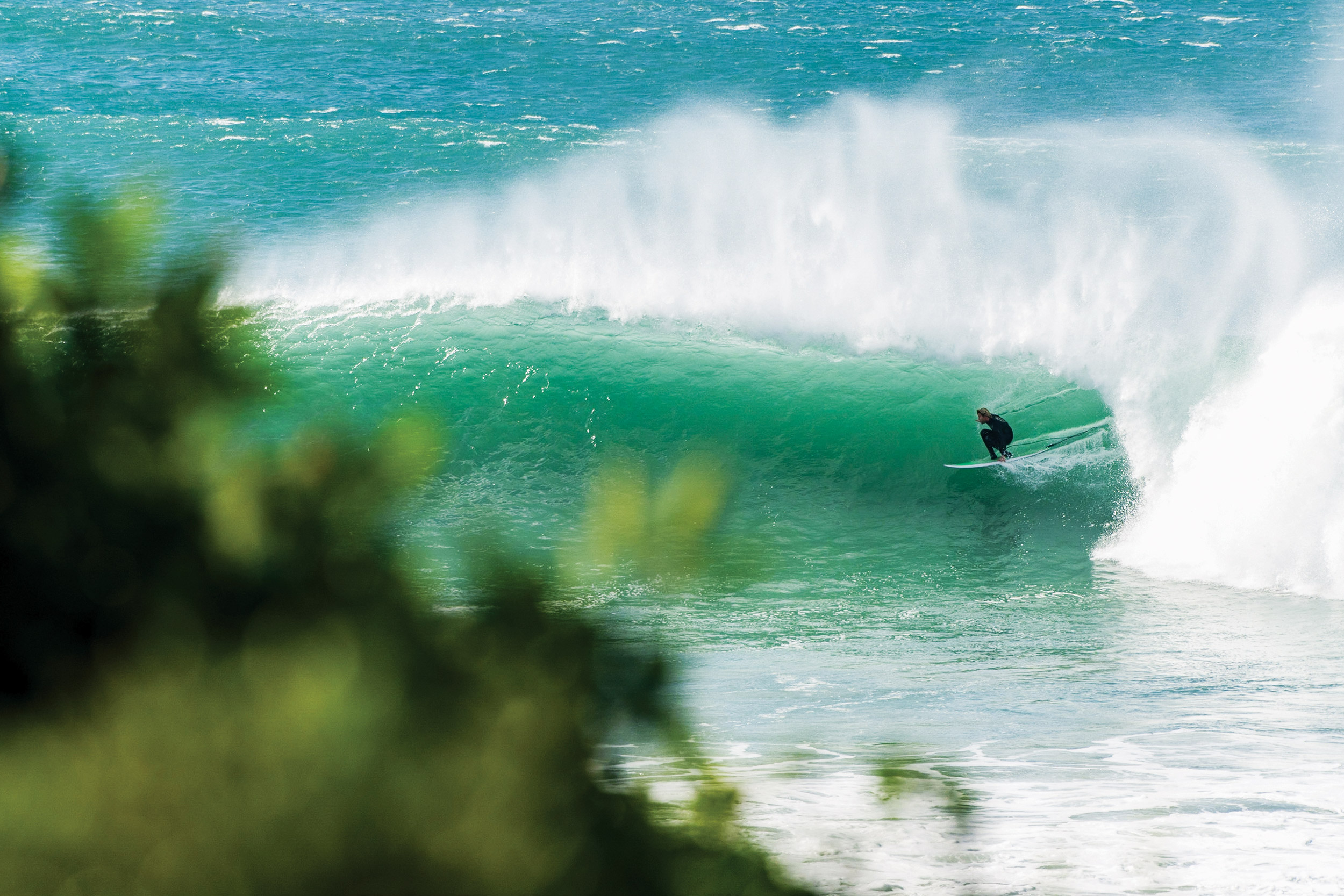
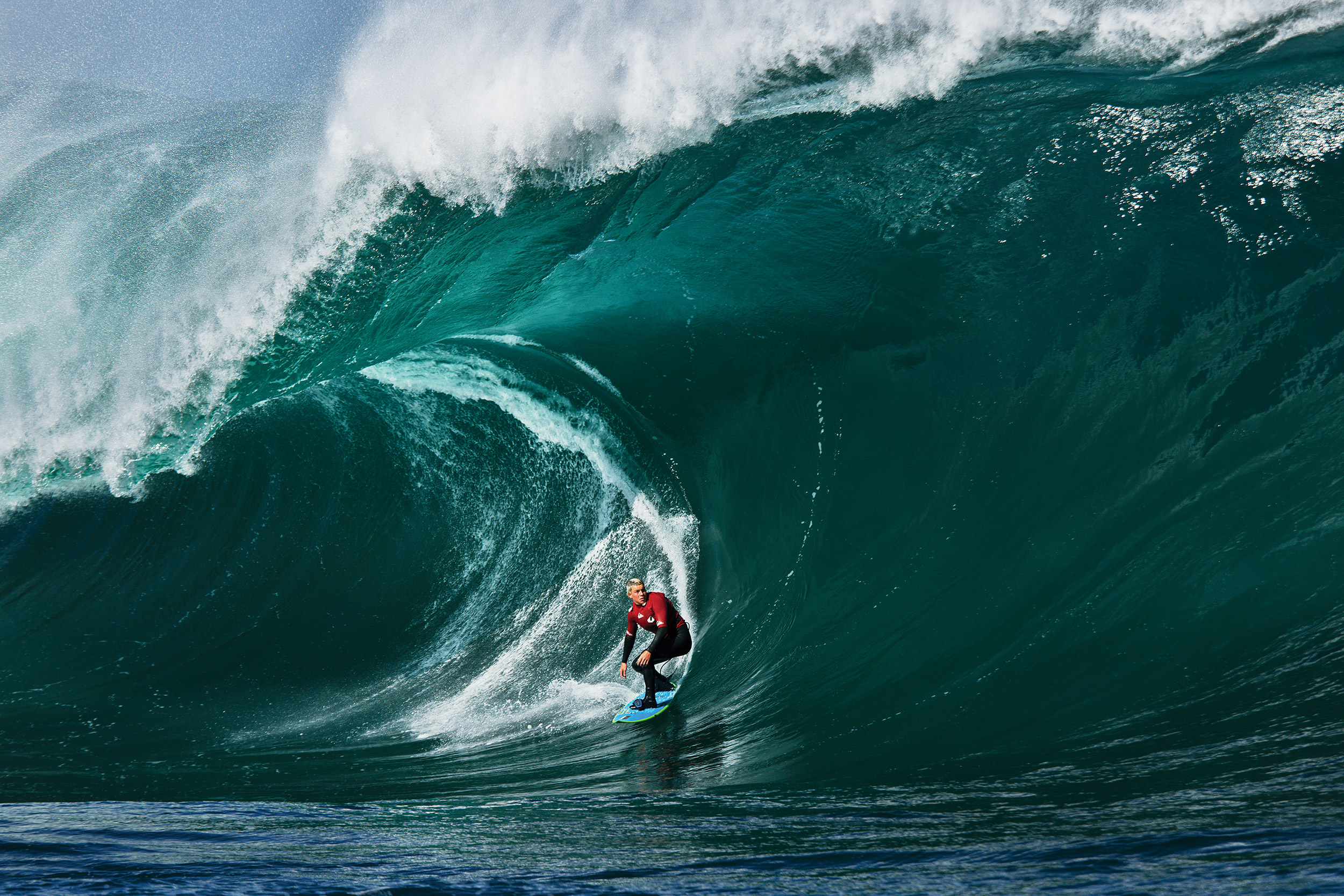
SURFER: HARRY BRYANTPHOTO: DUNCAN MACFARLANEAlthough photographer, Duncan Macfarlane, had been on a couple of trips to South Africa before, it was his first time in J-Bay. Travel-ling with Creed McTaggart and Jai Glinde-man, Dunc was posted up in a unit, a street back from the fabled point. Fortunately, the lodging’s over-sized deck delivered a full view of J-Bay’s glorious lineup and this is where they spent most of their time. “If you sat on the couch for just two minutes you had to get up and look at the surf,” explains Duncan from his home back on the north coast of NSW. Although conditions weren’t always optimal the point did turn on for a couple of days recalls Duncan. “It was pretty clas-sic J-Bay, six-eight-foot and offshore… Creed McTaggart surfed for eight hours straight. ” As clouds and rain squalls regularly traded places with rainbows and blue skies, Duncan spent much of the day shooting from the deck of his unit. However, in between downpours he’d duck down to the edge of the point for a different perspective. Gregarious goofy-footer, Harry Bryant, was there with Mikey February and Holly Wawn, but the two crews eventually melded. When Harry throttled through a hollow section, clutched a rail and spliced through the offshore chatter on his gun, Duncan sensed it was one of those shots missing from his image library. Magic J-Bay moment – tick. SURFER: BRYCE YOUNGPHOTO: ROWAN KEEGANBryce Young loves to experiment with differ-ent craft. Over the years, the gifted natu-ral-footer has thrived on singles, twin fins, thrusters, asym’s, quads, skateboards, logs and more. Equipped with an open mind and dynamic skills, his surfing becomes a kind of degustation menu – full of different flavours to be explored. The alaia is one particular design Bryce has acquired a taste for over the years. Footage of him slashing and carv-ing on the narrow, thin strips of finless wood seems to make a mockery of the average surf-er’s dependency on three rudders. Slotted comfortably behind the curtain in this shot, Bryce lets us know that his unhinged slider serves as no barrier to the barrel. The board is a refined, 5’9” version of the model he and his brother-in-law, Taylor Jensen (Multiple world-champ long boarder), have been work-ing on for over a decade. Quizzed about his motivation to discard the fins, Bryce empha-sises the distinctive sensation his Pawlo-nia-wood craft delivers, “ It’s … Read more

SURFER : HARRY BRYANT
PHOTO : DUNCAN MACFARLANE

Although photographer, Duncan Macfarlane, had been on a couple of trips to South Africa before, it was his first time in J-Bay. Travel-ling with Creed McTaggart and Jai Glinde-man, Dunc was posted up in a unit, a street back from the fabled point. Fortunately, the lodging’s over-sized deck delivered a full view of J-Bay’s glorious lineup and this is where they spent most of their time. “If you sat on the couch for just two minutes you had to get up and look at the surf,” explains Duncan from his home back on the north coast of NSW. Although conditions weren’t always optimal the point did turn on for a couple of days recalls Duncan. “It was pretty clas-sic J-Bay, six-eight-foot and offshore… Creed McTaggart surfed for eight hours straight. ” As clouds and rain squalls regularly traded places with rainbows and blue skies, Duncan spent much of the day shooting from the deck of his unit. However, in between downpours he’d duck down to the edge of the point for a different perspective. Gregarious goofy-footer, Harry Bryant, was there with Mikey February and Holly Wawn, but the two crews eventually melded. When Harry throttled through a hollow section, clutched a rail and spliced through the offshore chatter on his gun, Duncan sensed it was one of those shots missing from his image library. Magic J-Bay moment – tick.

SURFER : BRYCE YOUNG
PHOTO : ROWAN KEEGAN
Bryce Young loves to experiment with differ-ent craft. Over the years, the gifted natu-ral-footer has thrived on singles, twin fins, thrusters, asym’s, quads, skateboards, logs and more. Equipped with an open mind and dynamic skills, his surfing becomes a kind of degustation menu – full of different flavours to be explored. The alaia is one …

This is a Premium Feature only available to Tracks subscribers.

Existing Subscriber?  Login here.

CHRISTA FUNK- LET THE Light in: Issue 595
How a land-locked mainlander chased ocean dreams to the North Shore lineups and beyond.

Did your parents detonate your childhood dreams? Or just adult all over them?

Seven-year-old Christa Funk returned home from the aquarium with tales of blue ringed octopus and dancing dolphins. Despite growing up more than 1,000 km from the nearest ocean – a hair West of the American mid-West, in Grand Junction, Colorado –, she knew then that the ocean was the place for her. Like most of us, she resolved to be a marine biologist.

Later that week, her dad, pharmacist Bob Funk, thought he was dropping a truth bomb by sharing the projected salary for his youngest daughter’s prospective field of study.
1998 Salary Projections:

Marine Biologist (with PhD): $40,000 McDonald’s Store Manager: $55,000
In fact, seven-year-old Christa Funk was not perturbed by these statistics. It sounded like a helluva lot of money to her.

Ultimately, Christa did get a degree in marine biology. But she also pushed into far more harrowing territory than simply committing to a below-living-wage career.
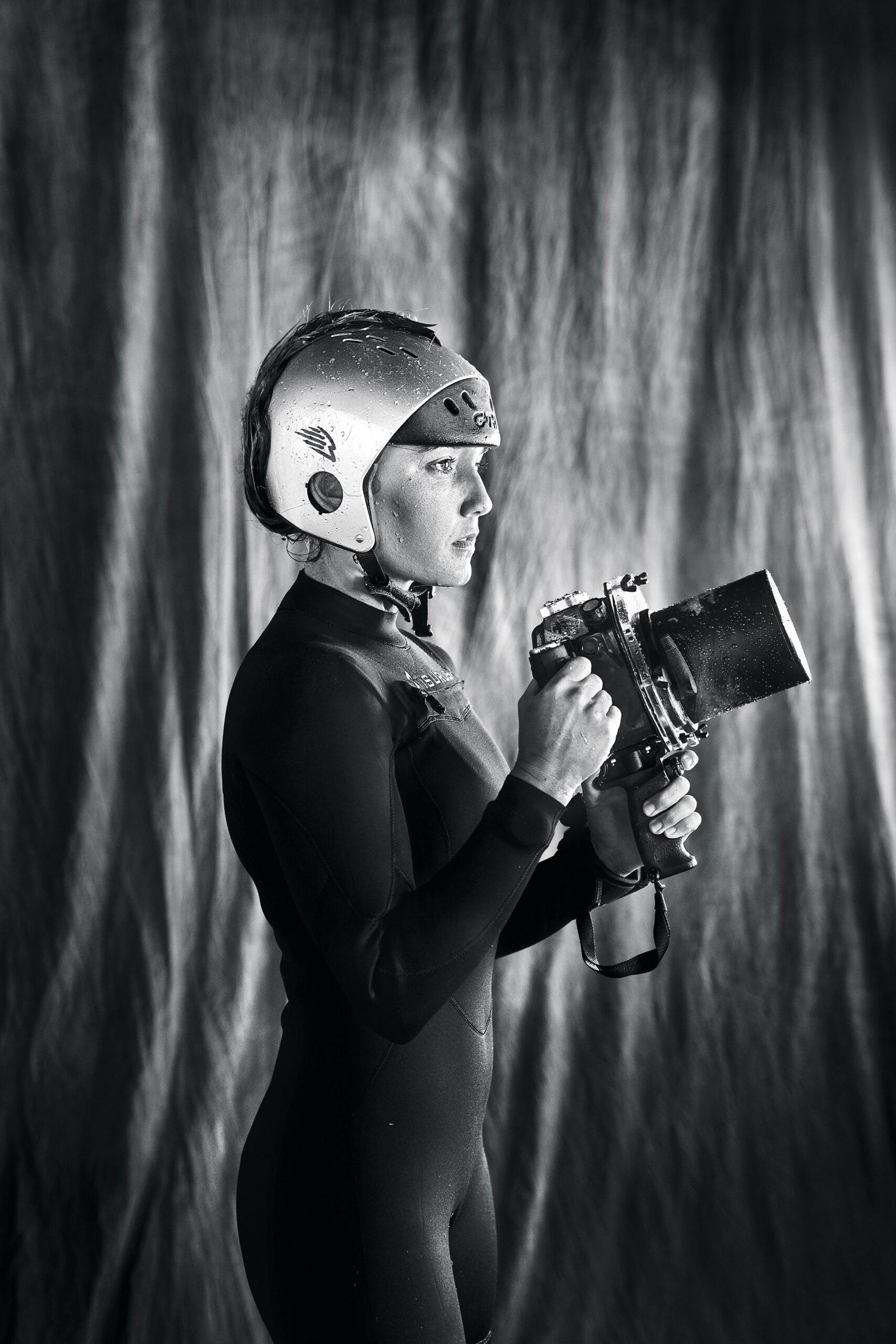
Yes, this Coloradan became one of the crazies to bob and buoy in the heaviest surfing lineups in the world – on the heaviest of days. She’s a staple photographer at Pipeline, putting her body on the line for the chance of crystallising a moment of that heaving vortex.
But her trajectory was as bent as light through the lens.

The thing that surprises me most about Christa Funk? The number of ‘fucks’ in any given sentence.
Outside of a country pub, I’ve hardly heard the word used so generously in casual conversation: verb, noun, adjective. I’m intrigued by the creative word bending, but also mindful that my five-year-old is soaking it all in.
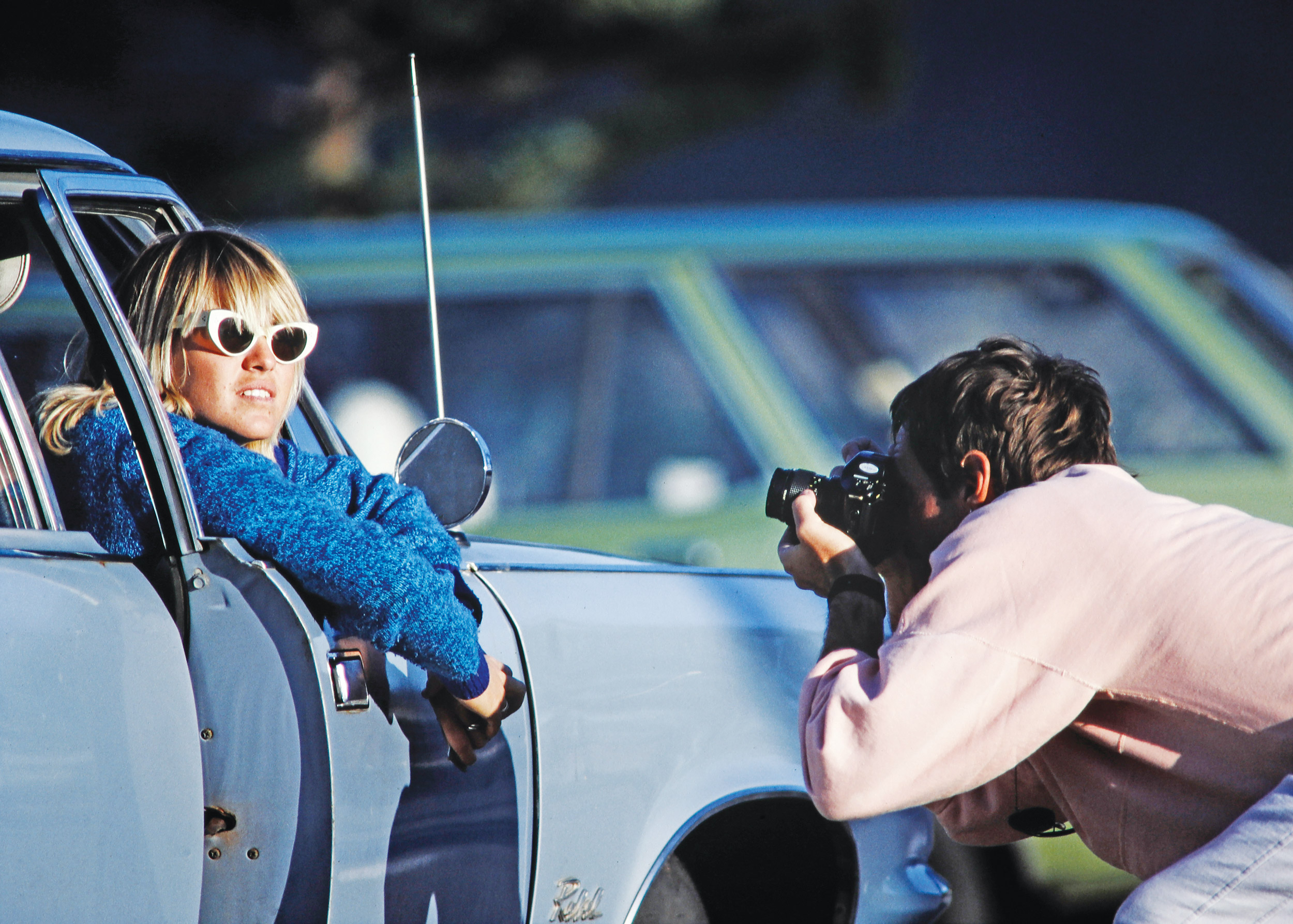
Christa is visiting my partner and I on the far North Coast of NSW, on assignment for Patagonia to document our latest projects. She’s …

This is a Premium Feature only available to Tracks subscribers.

Existing Subscriber?  Login here.

LAHAINA, NOW & THEN: Issue 595

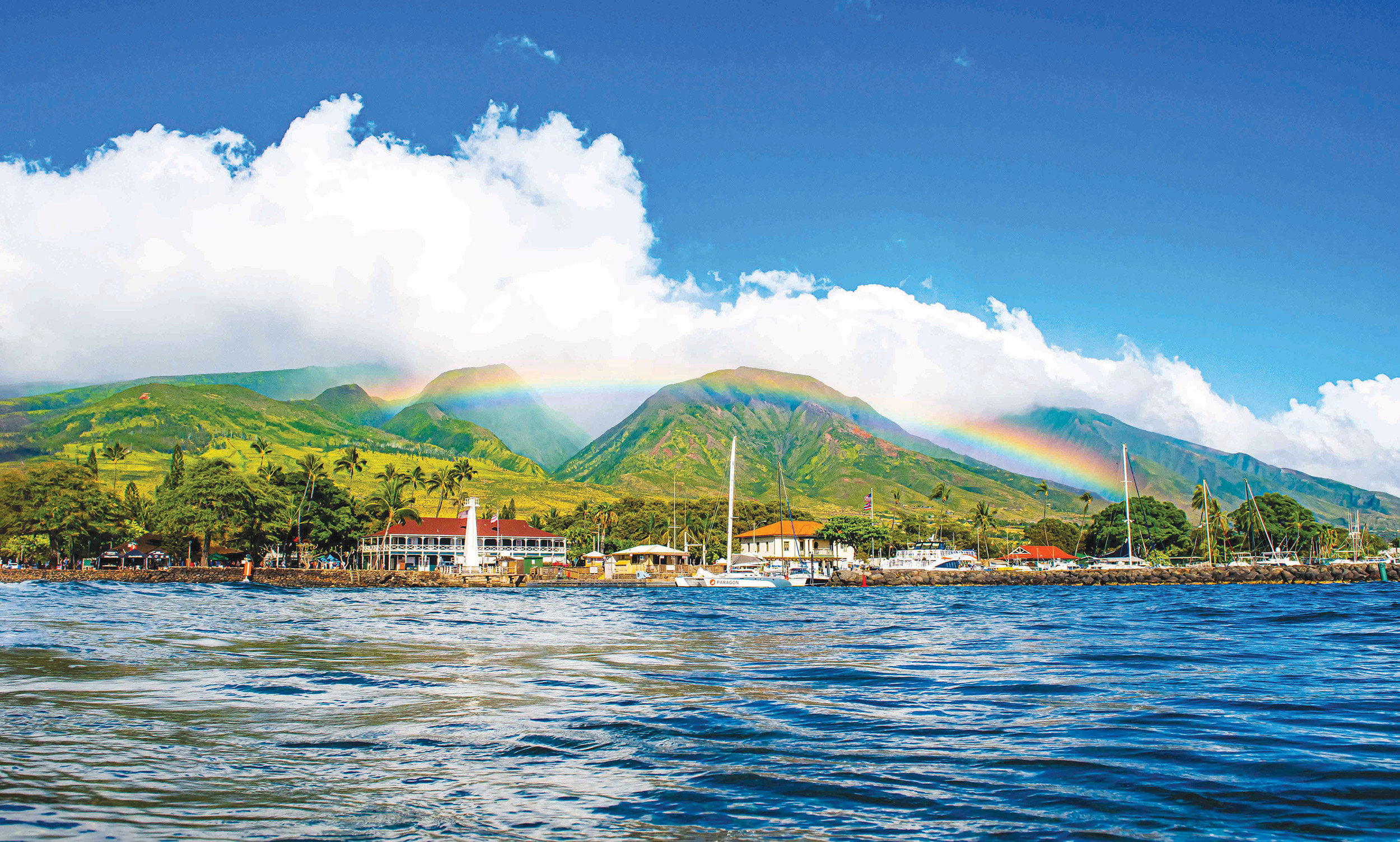
Former capital of the Hawaiian Kingdom, Lahaina, Maui was levelled by fire in August 2023. The wreckage exposes issues of political corruption and environmental degradation. The surf community’s support for an area anchored in Maui surf culture pulses through it all.
Maui is two islands waiting to shake loose of one another. Haleakala and the West Maui Mountains are the volcanoes that form the body and the head of Maui, respectively.

The day Lahaina burned Matt Meola was out bow hunting with his friend Lucas Nelson in a forest on the slopes of Haleakala. Lucas had never been, and Matt felt like putting a bit more country in the singer/songwriter (if it’s possible for a child of Willie Nelson to get more coun-try). Meola, professional appreciator of air wind, stood on a ridge during the hunt and thought to himself: “I don’t know if I’ve ever seen it this windy.” He may have been right. Reports came through of winds gusting up to and over 115 km/hour on the day of the fire.
Meola heard of fires popping up in Kula and Lahaina, but he assumed these were the usual small blazes that would soon be contained, an occurrence that has become common on Maui. Meola, like much of the world, went to sleep unaware of the severity of the fires. He woke up to devas-tation. That he was on Maui speaks to a disconnect on the island; that disconnect is reflected in the island’s history and poli-tics. An idyllic escapist fantasy also home to a working class that cannot escape the high cost of living and low wages. Maui is psychically and spatially divided.

Understanding Maui’s schisms requires considering fantasies and realities across the island’s history. When my father deplaned at the Kahului airport, in July of 1970, the airport was a small rotunda built around a tree. A banyan imported from India with airborne roots attempting to get grounded was the focal point of a human structure devoted to transience. Of course, my father cared more about the 7’6” …

This is a Premium Feature only available to Tracks subscribers.

Existing Subscriber?  Login here.

CLASSICAL Leanings: Issue 595

How Matt Chojnacki arrives at the past in style.

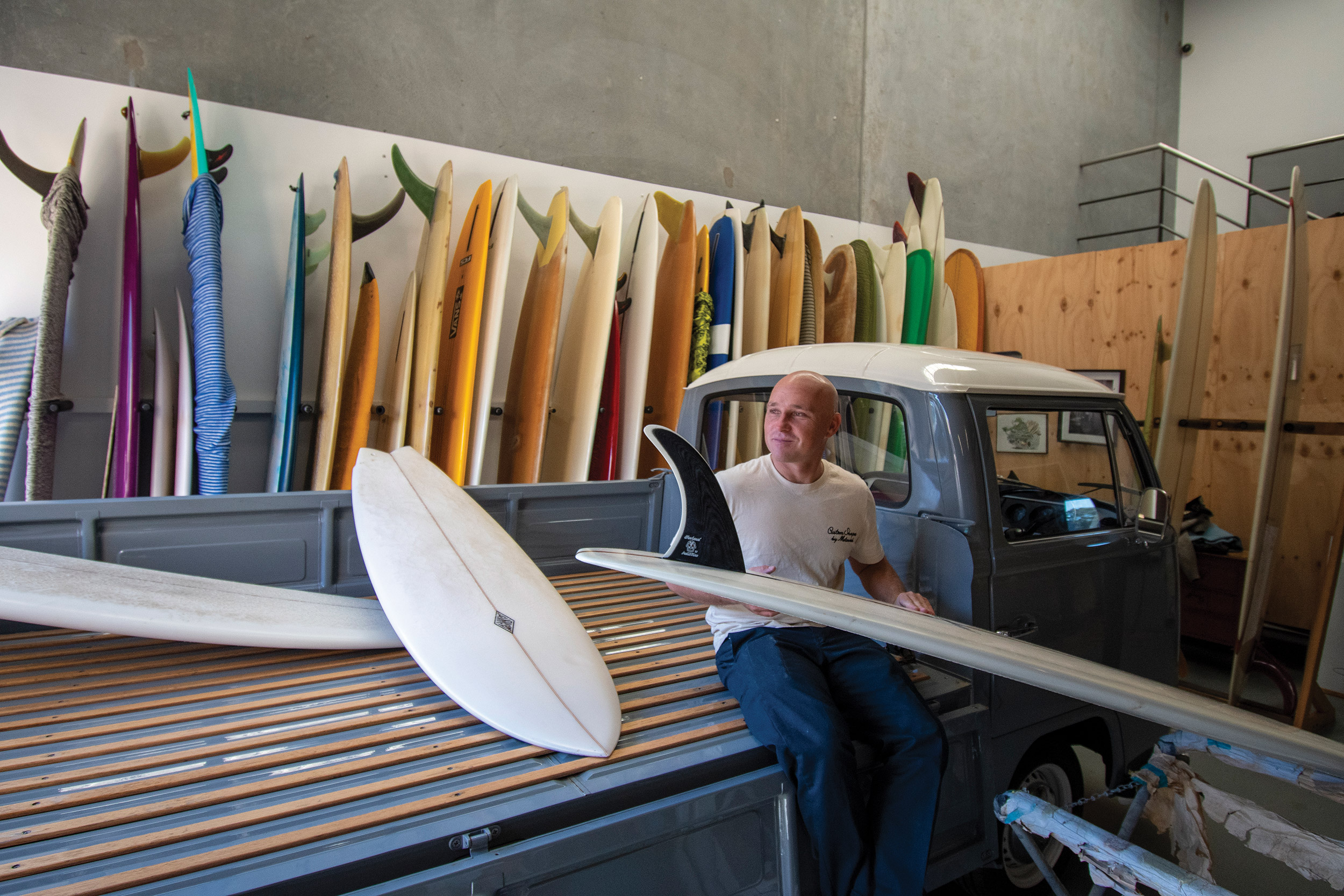
Matt Chojnacki grew up surfing in the storied lineups of Sydney’s Northern Beaches, in the 90s and early 2000s. They were heady times, when a clutch of northside surfers were still a force on the World Tour, Layne Beachley was winning World Titles,
Ozzie Wright, was launching in multiple creative directions and the echoes of past legends and pioneers could still be heard.

Like his mates and contemporaries Matt rode shortboards and drunk in the cocktail of surrounding surfing influences. However, from an early age he developed an interest in the rich surfing history of the Northern Beaches. Soon he was experimenting with different craft, honing a distinctive style and driving up and down the coast to longboard contests with his dad in their fully restored orange Combi.

All this was long before the renaissance of the log and the mid-length had kicked in or Combis were cool again. It was a bold path for a teenager to take, but Matt was already accustomed to being the outsider as the smallest kid on the football field with the long, Polish name no one could pronounce.

Since then, Matt’s approach to understand-ing the evolution of surfing and surf-craft has become fully immersive – he picks the brains of shapers and legends, reads vora-ciously on surfing history, hosts retreats and talking story nights, commentates at longboard events and most importantly, he is highly proficient on an eclectic range of surfcraft. Matt doesn’t just know his surfing history, he connects to the past with every bottom turn, trim-line and take-off.

While Matt has been able to make money from various surf industry streams – contest prize money amongst them – he always figured he needed more than a good cut-back to hang his hat on. Not long after leaving school he joined his …

This is a Premium Feature only available to Tracks subscribers.

Existing Subscriber?  Login here.

THE INDO MOTORCYCLE DIARIES CHAPTER III –THE WILD West: Issue 595
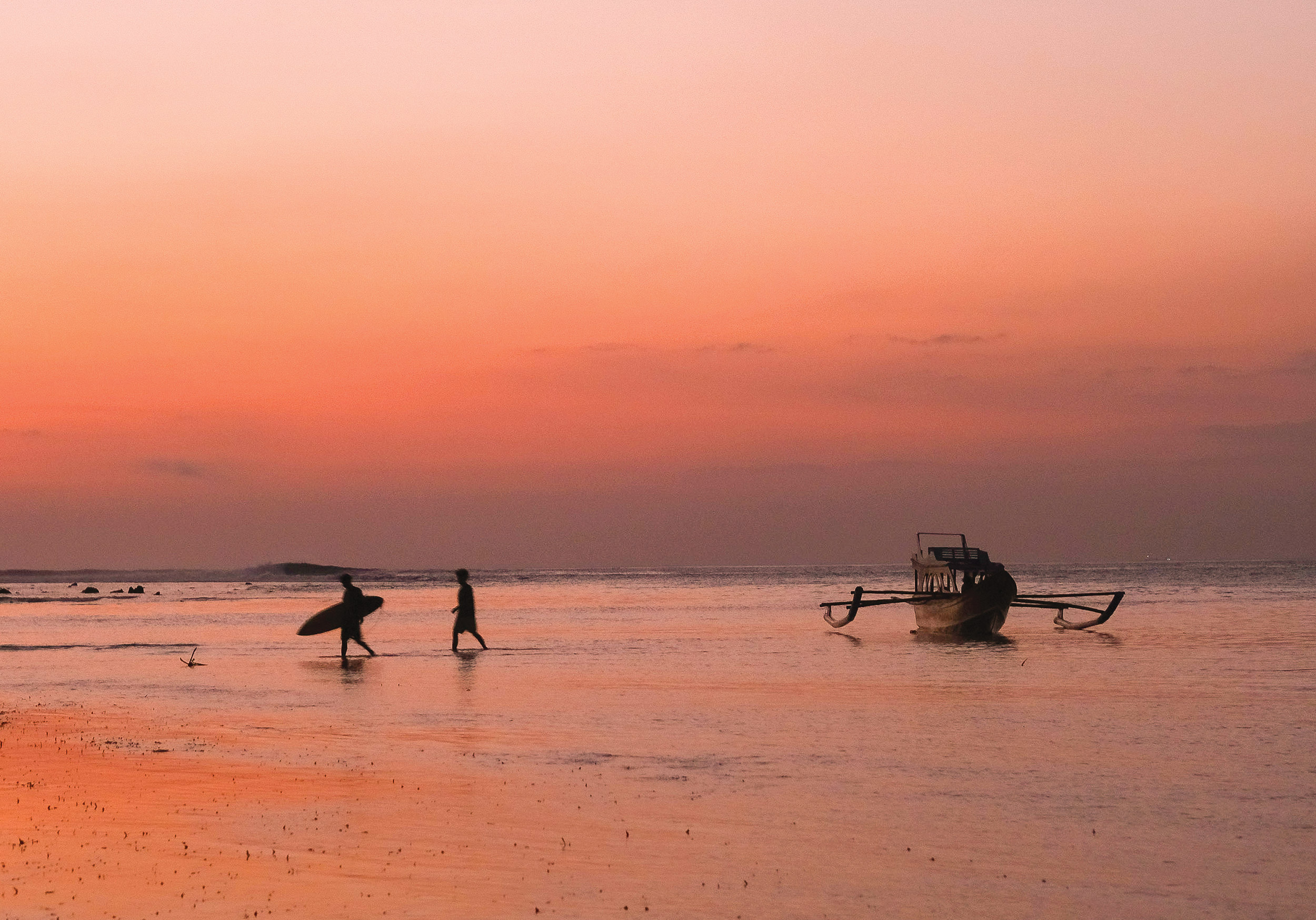
Where itinerant Indonesians work in the goldmines, while travelling surfers jostle for hollow treasures.

You see some crazy things on the road in Indo. Yesterday, mid-way through this two-
day journey across three islands, I watched a motorcyclist swaying with a full-sized
refrigerator strapped to the back of his scooter. Also, two motorcyclists carrying
a 15-foot ladder between them, heads poking through the rungs.

It’s bewildering, but there’s a kind natural order to the chaos. It just seems to work. Nothing to do but embrace it and keep riding. On, into the dry country; every-thing, brown and mountainous, horses and goats chewing at weeds beside the wide and potholed road. I’m a long way from Bali now, in this renowned surfing area that is also a bustling Indonesian gold mining town.

Outside of the surf camps, it’s hard to find cheap digs here. Twenty-thousand workers have arrived from all over the country to build a new smelter. All lodgings are either full or ghastly over-priced, at least by Indonesian standards. Fortunately, a friend of a friend offers me a couch at his beachside house. Even more fortunately, this couch happens to be just a short walk from one of the best waves in Indonesia. Travel helps to restore a kind of faith in humanity; people really will go out of their way to help you along the way.

With a forecast typical of this woeful Indonesian surf season, there is little else to do but explore the area. This tiny beachside hamlet of three Western-owned houses offers insight into the bizarre collision of two worlds. My Australian ex-pat neighbour, Julie, is 60-years-old. She moved here after her marriage broke down and has lived here alone with her four dogs for the past four years. It’s an idyllic life at times, she says, but living in a cheap and tropical paradise like this isn’t all …

This is a Premium Feature only available to Tracks subscribers.

Existing Subscriber?  Login here.

Young Brave Heart: Issue 595

Seventeen-year-old Ned Hart’s abrupt ascension into the big-wave spotlight.

For the third time in as many minutes, Ned Hart is having a little trouble stringing a sentence together. “I went up north, then home, then chased a swell down south, then south again, wait…that doesn’t make sense. North, then south, then I went home…then south? Wait, what?”

It was an amusing, and it must be said, charming, slip in syntax trigged by the 17-year-old attempting to recount where’d he been over the past two months while chasing waves.

Perhaps compounding the confusion is that Ned had also not long returned home from a stint in Sumatra only to learn his presence was required the following month in Portugal for the inaugural New Big Wave Award ceremony as a finalist in Ride of the Year category.

Of course, all paths will lead to Hawaii in December and the order for Jaws specific paddle guns (9’6” and 10’0”) has just been completed with board sponsor, Pyzel.

There’s a lot going on,” surmises Ned, before reaching for a version of a phrase he’d repeat over and over throughout an illuminating two-hour conversation.

“It’s so sick, I’m pumped on all of it.”

The ascent of Ned Hart, professional big-wave surfer, would appear to have been launched when two thrilling rides at Tasmania’s Shipstern Bluff were pinged online seconds after they’d been completed in March this year.

Though Tim Bonython’s masterful ultra-high def recording of both rides would later appear, it is the grainy, filmed-on-a-phone-from-the-rocks versions that really gives them scale.

In both, the filmer and bystanders can be heard drawing a collective breath as Ned airdrops into the fabled warped bowl section before erupting into cheers when he emerges from a no-make barrel on one wave, and hoots of disbelief when he charges into a closeout end section on the other.

Amusingly, in …

This is a Premium Feature only available to Tracks subscribers.

Existing Subscriber?  Login here.

SURFING IN CONFLICT: Issue 595

When a surfer finds himself in a warzone, again

When people think of surfing in Israel, images of fun, warm-water, peaky beach-breaks come to mind. Shores lined with ripped hacky sack-playing commandos, and multi-ethnic bikini-clad beach babes, dotted among the black outlines of Hasidic Jews in full gear. An ecstatic party atmosphere amidst the high tension that is the Middle East, with Tel Aviv as its pumping liberal secular heart. All to the backdrop of reggae in harmonic minor. Well, that’s what I think of.

Surfing was introduced here in 1956 by Doc Paskowitz, and since then, the popularity of the activity (I won’t call it sport) has grown immensely. If you speak with many Israeli surfers they will tell you with pride that considering the inconsistency of the Medi-terranean Sea, they shred pretty hard. Kelly Slater also came from a somewhat wave-starved region I would add.

Then along comes October 7th. In one day Israeli surf culture has changed, along with it the entire nation. The country is again in the throes of war, but it doesn’t feel like anything they have dealt with before. First, some context: I’m from Australia. I arrived a few days prior to the attack to see my family, half of whom live in Israel. After sitting out hours of Hamas rockets in a shelter, I was not aware of what was really happen-ing. Having just come from Ukraine, I had become somewhat accustomed to air raid sirens and rocket attacks, but not to the sight of heavily armed terrorists on most likely Toyota Hilux pickup trucks airing live on TV. Only now am I beginning to understand the gravity of what took place that day, and is still taking place. I decided to try and track down a few surfers to get their thoughts and feelings during this time.

I started by …

This is a Premium Feature only available to Tracks subscribers.

Existing Subscriber?  Login here.