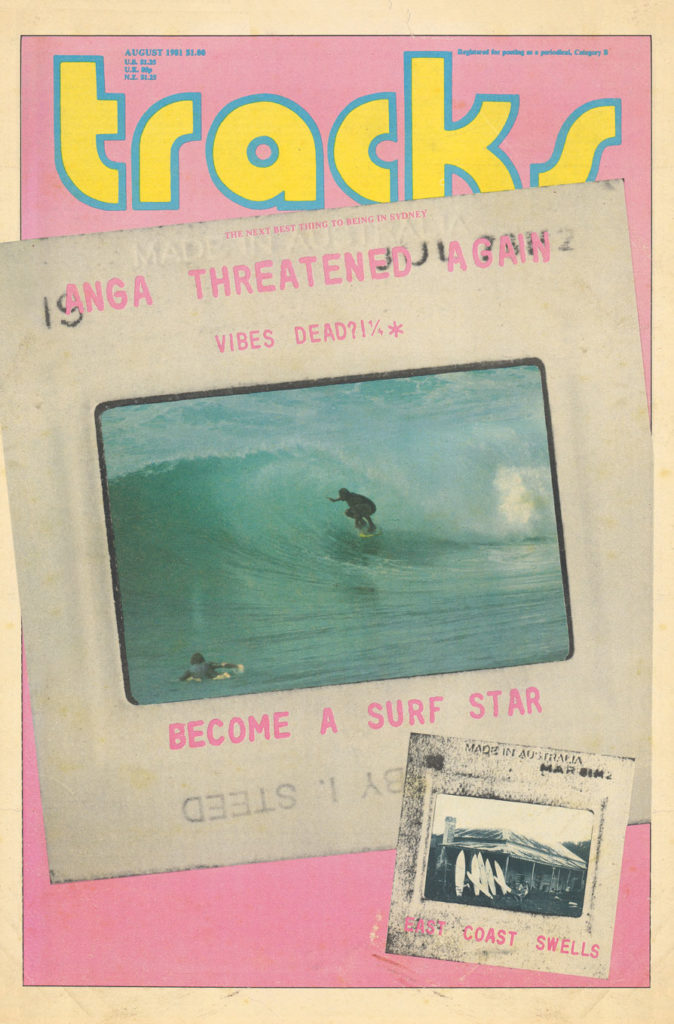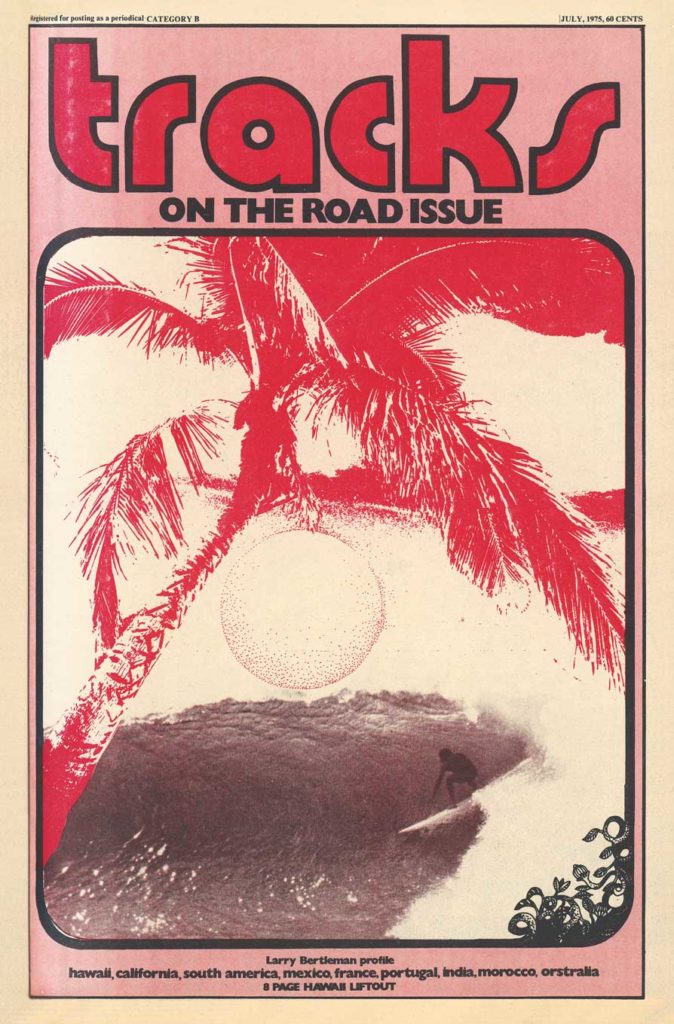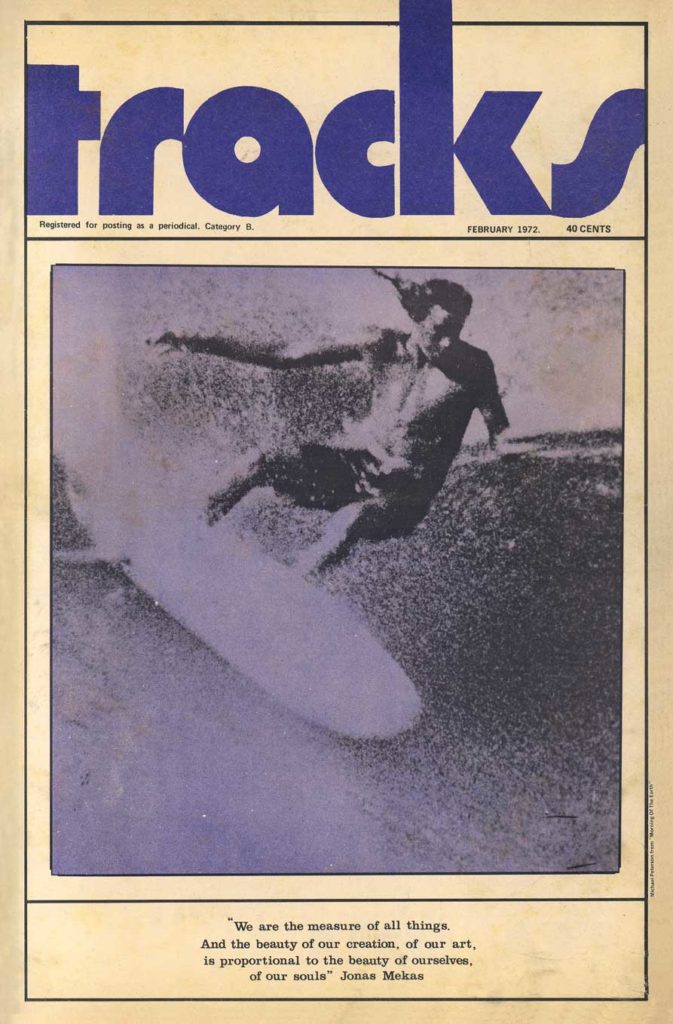

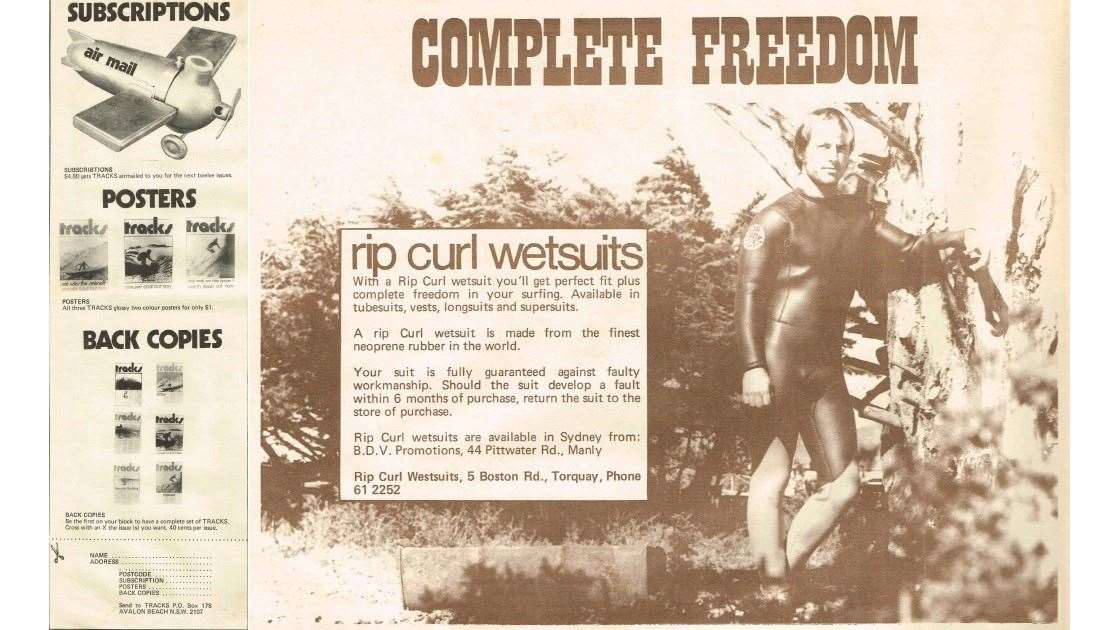
It’s an often-overlooked fact of Australian surf industry history that the creator of the Rip Curl wetsuit was none other than Quiksilver founder Alan Green, thus beginning a decade or so of business cosiness between the two emerging brands that at times got dangerously close to collusion.
The prototype Quiksilver boardies were designed in a corner of Rip Curl’s Boston Road bakery in the summer of 1969-70, even as the next-season wetties were being skilfully cut by John “Sparra” Pyburne just a few trestle tables away. That two of the until recently Big Three were born more or less twins in Torquay is interesting enough, but the paths the two brands took as they diverged and grew is fascinating stuff. But let’s just focus here on the emergence of the miracle (if toxic) fabric known as neoprene.
So it was Greeny, not the Rip Curl founders Brian Singer and Doug Warbrick, who introduced wetsuits to the Rip Curl Surfboards HQ, having seen imported neoprene diving suits when he worked as an accountant at Australian Divers in Melbourne. But Greeny’s first short johns and vests, cut by Sparra, glued by Maurice Cole, were not the first Australian-made surfing wetsuits. That honour went to a highly-strung and little known clubbie paddler from Adelaide named John Arnold.
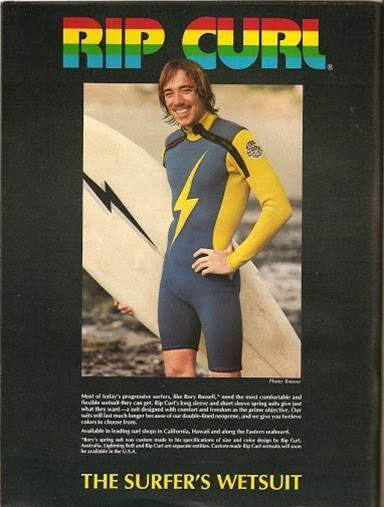
In 1967 Arnold turned his parents’ footwear store into the John Arnold Surf Centre, and struck up a relationship with one of his suppliers, the ubiquitous backroom player Barry Bennett. The two men flew to California where Bennett used his friendship with foam lord Gordon “Grubby” Clark to secure a meeting with Jack O’Neill, who was then making unquestionably the best surfing wetsuits in the world. Arnold and Bennett walked out with a license to produce and sell O’Neill products in Australia, and within a matter of months multi-coloured home-grown O’Neill short johns were on the market.
By the dawning of the Tracks age (1970) there were four or five different Australian wetsuits in production, but the stage was set for a battle royale for market share between the best-known brand, O’Neill, and the newcomer with serious cred, Rip Curl. Although it was hard to get past the perception that O’Neill had superior technology and designs (a point that had been demonstrated in the Rubatex O’Neill suits worn by the visiting Americans at the 1970 world championships at Bells and Johanna), the turning point for Rip Curl came when Brian Singer and Alan Green sourced a long-arm Singer sewing machine that enabled them to make 3mm long johns. Coupled with a long-sleeved 3mm vest, it was effectively a 6mm steamer.
Doug Warbrick recalls: “The cold water protection was good, even if your movement was restricted somewhat. Every surfer in Victoria had to have one, and we started to do good business.”
By the time professional surfing arrived in Australia in 1973, Rip Curl Wetsuits was in a healthy enough position to lead the charge with sponsorship of the Rip Curl Pro at Bells Beach. In terms of brand recognition, this was a no-brainer. Everyone who surfed at Bells at Easter had to rubber up sufficiently, and the sponsor not only “flowed” product to as many of the top pros as it could reach, but also hosted lavish booze-fuelled parties at the pub or the factory.
Partly due to the sociability of its two founders, Rip Curl parties became legendary in their own right. I remember on one occasion seeking out a back room with a well-known Hawaiian surfer for the purpose of quietly imbibing a mood-enhancing substance, and running into “Rubberman” disporting himself on a pile of offcuts. This was not Larry Bertleman, but Torquay’s own Rubberman, who mysteriously found sexual gratification in the texture of neoprene and had wangled himself a storeroom job that offered him access whenever the urge took him. We quickly did our business and left him to his.
In those days there was fast developing a magic formula for emerging pros. You got your boards from McCoy, your boardies from Quiksilver and your wetties from the Curl. If you won a couple of events, they might even sling you a few bucks and call you a team rider. But none of it was very professional, as we found when Team O’Neill arrived for the three-event 1976 season.
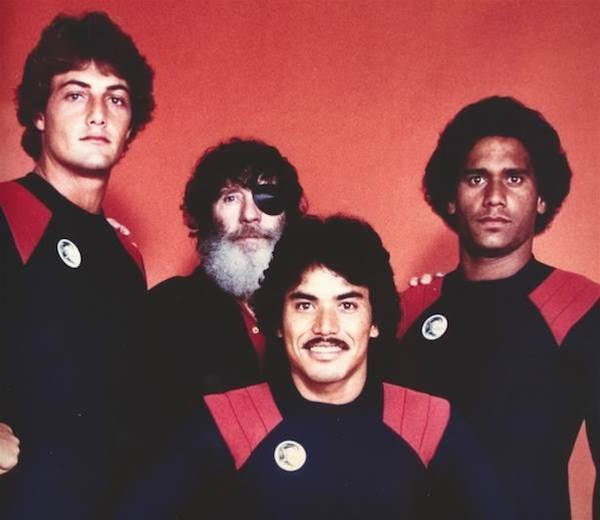
O’Neill, still easily the biggest-selling wetsuit in the world, had a huge team in the US, but for its global markets it had tied up two of the most exciting and camera-friendly surfers in the world – Shaun Tomson and Reno Abellira. Shaun’s movie star looks and deep tube-riding were a marketer’s dream, while Reno’s fearless big wave riding, swooping turns and mysterious glances gave off a whiff of danger. When they rubbered up in magnificent colour-combo O’Neills of the latest design, the motor drives started whirring up and down the beach.
Shaun, as always, looked a million bucks, but who could ever forget Reno that year! This was the time of the bell-bottoms, tight crotch and legs flaring below the knee to hide your Cuban-heel boots. Reno’s contrasting panelled O’Neill long john was cut to the same pattern. The bell-bottom long john was either super cool or tragically uncool, but I remember watching him weave down the line on his revolutionary 5’7” fish at Narrabeen one May day, his bell bottoms flapping in the breeze, thinking how cool is that!
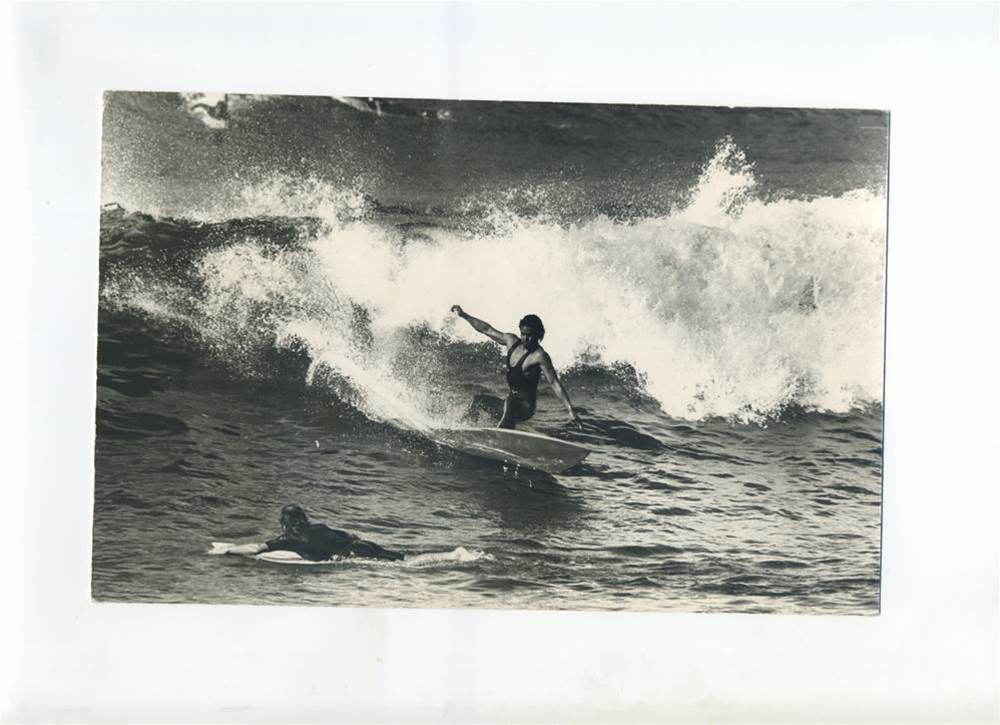
O’Neill won that particular battle but the war goes on to this day, with Patagonia firing the most recent volley over the heads of the neoprene market. There’s so much technological innovation in wetties now that it’s hard to keep up with. But this much I think I can safely say: we won’t be seeing a return of the bell-bottom. •