Winning a world title requires a delicate and harmonious coalescence of multiple factors. However, it’s indisputable that a surfer’s relationship with their craft is an integral part of any successful bid for the ultimate prize in pro surfing. The connection between surfer and board might be compared to that which exists between a driver and their vehicle in Formula One racing. On a more romantic level, it’s a little like an ancient samurai warrior’s search for the perfect sword – and sword maker. In pure military terms it’s about having the best arsenal of weapons for battle.
This series aims to look at the forces, which conspired to create the boards that were beneath the feet of champions. Every board that was critical to a title victory has an intriguing story behind it. In the pursuit of glory rival designs were ripped off, sponsors abandoned, bedrooms converted into obsessive design studios and of course endless hours were spent in the shaping bay. Some of the investigations are conducted in the form of interviews, while others leave it up to the surfer or shaper to supply the details. Hopefully they all go some way towards unravelling the magic behind the boards that transported their riders to a place in history.
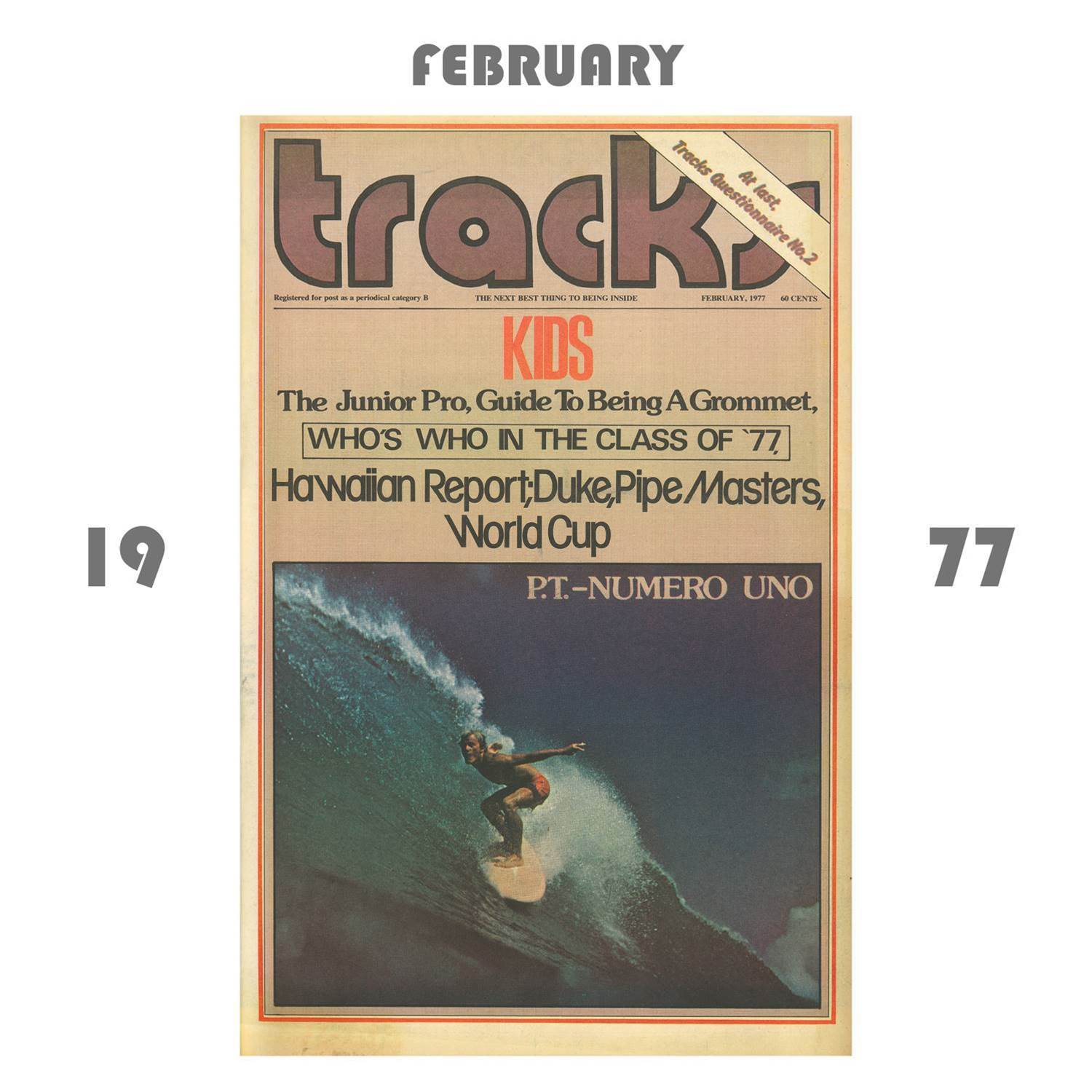
When Peter Townend arrived on the North Shore of Oahu in the winter of 1976 he was certain of three things. One: The disjointed gypsy tour he and a host of other surfers had been chasing around the world had been formally recognised as a cohesive world tour under the IPS. Two: The events earlier in the year would be backdated to calculate the ratings, going into Hawaii, making PT a serious contender for the inaugural IPS world title. Three: He needed a Hawaiian quiver to win the world title on. Below he talks about the boards and circumstances, which helped him arrive in Hawaii as a front-runner and how he acquired the Lightning Bolt gun that ultimately enabled him to seal the title.
Which boards were really critical in your 1976 world title victory?
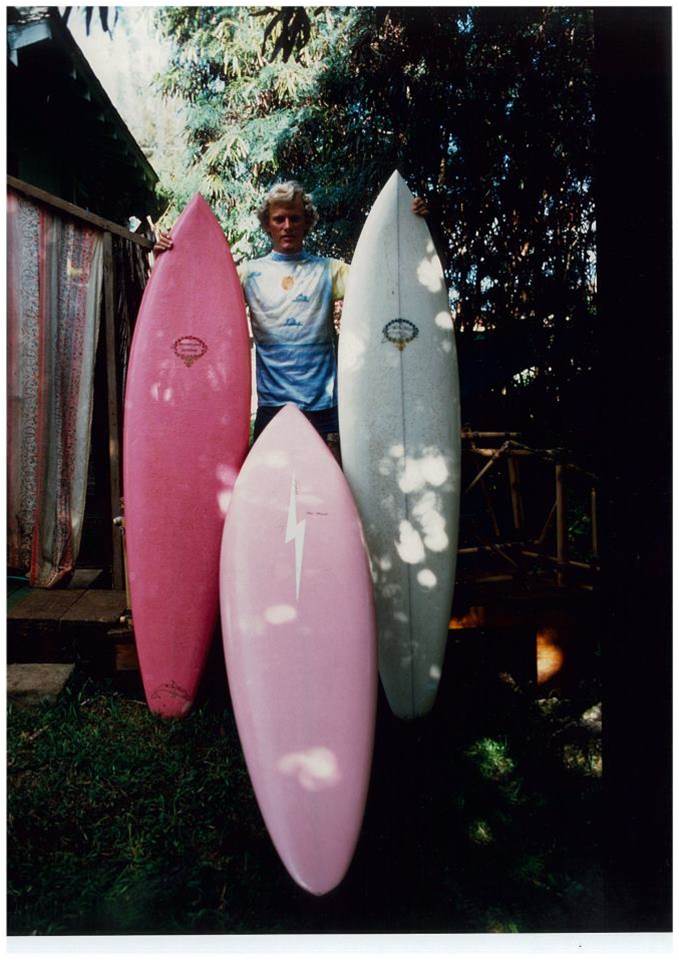
Everybody forgets I shaped my own for a decade, and my go to design was the diamond-tail, in ’76 I had a two boards that were critical, the 6’10” pink diamond-tail that I shaped at G&S in Cronulla that I had on the South African leg in ’76. In Hawaii I was working with Tom Parrish and he was making me diamond-tails too and the 7’10” was “Magic”, that one took me to three of the four North Shore event finals, which won me that first IPS title in ’76.
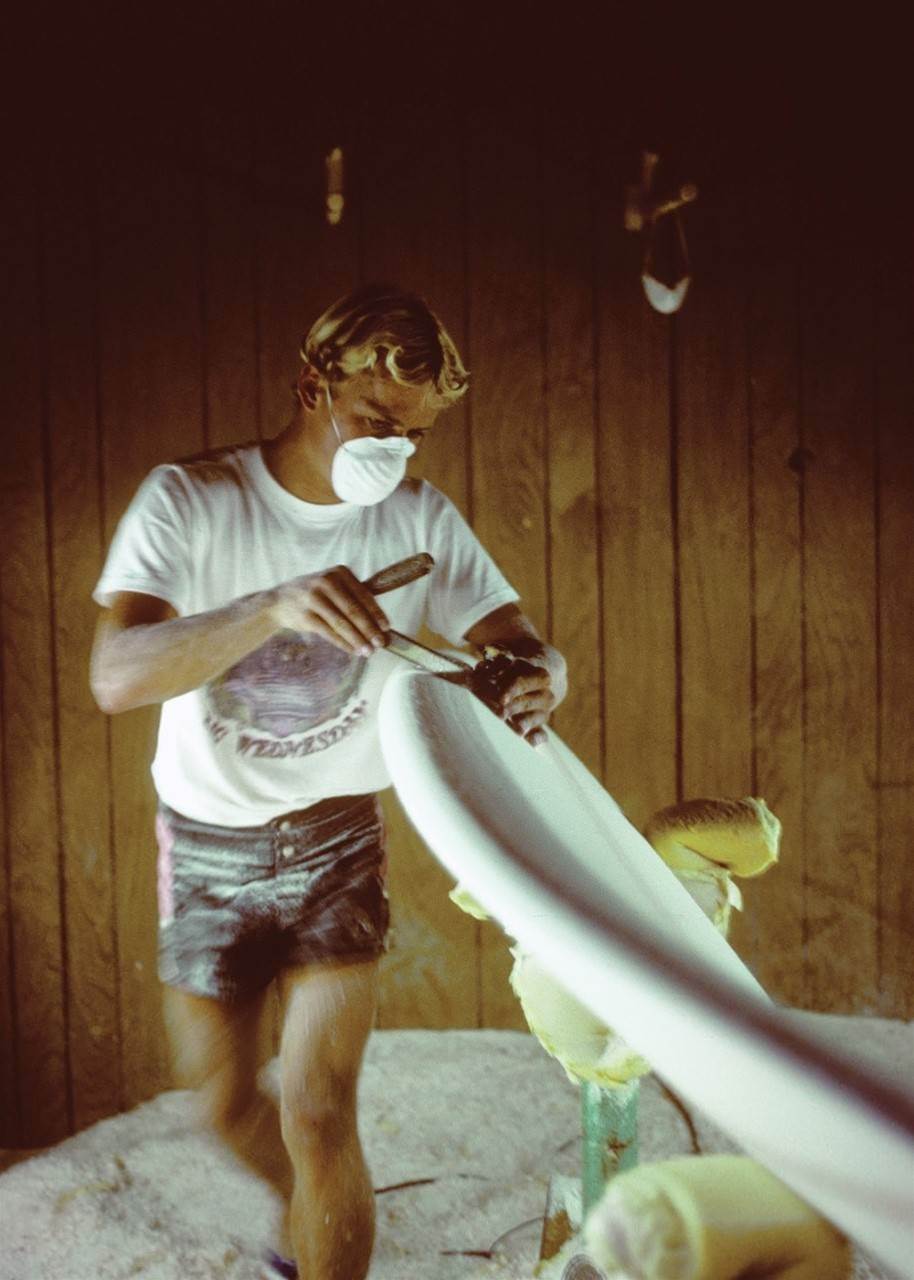
Explain the origins of your famous penchant for pink?
My mother’s to blame! Ha!ha!, At the family breakfast table in late ’69 I told her I was getting a new board and asked her what colour should I get it? She said “Son you should get it hot pink, that way they’ll never miss you”. That first pink Joe Larkin shape took me to second in the Queensland State Junior Titles and onto the Queensland Team and into my first Aussie Titles, so I figured that pink things were working and have stuck with it until today. It’s the number one question today I get asked “You still riding pink surfboards?
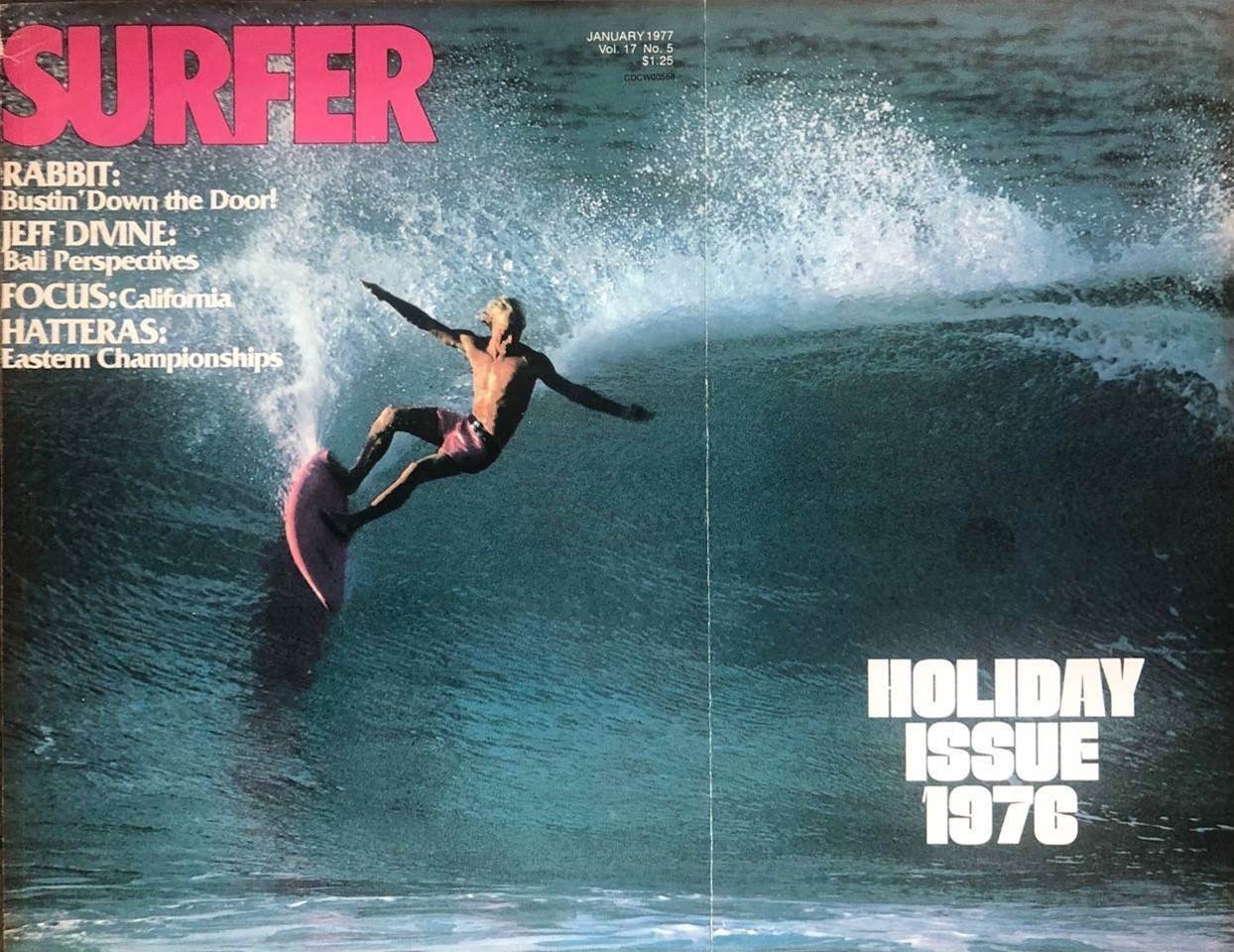
How did a Gold Coast boy end up at G & S in Cronulla?
I had befriended Cronulla’s Steve Core in ’71 and was travelling with him and his wife filming his first surf movie “In Natural Flow”, Steve was also working on and off at G&S in Cronulla and that’s how the connection to Cronulla and G&S developed. By ’73 I had secured a room at Mick Anastas’s, but still had a place in Coolangatta too and would go back and forth depending what the surf was doing, especially if there was a cyclone zeroing in on the Gold Coast.
What was the setting like at G and S?
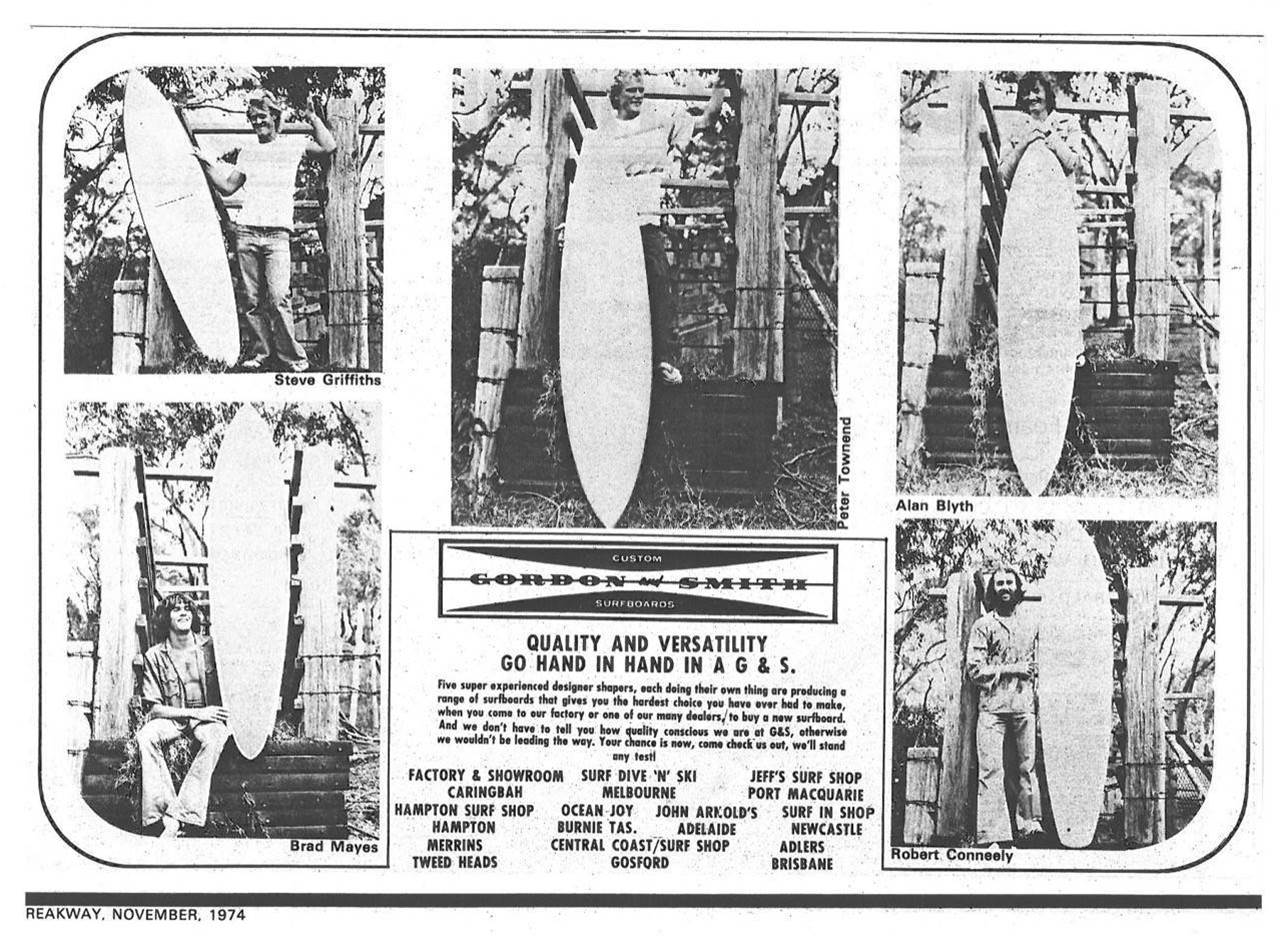
We had a great crew at G&S in the early to mid-seventies, building some of the best boards in Australia at the time, a great crew of shaper/designers like Terry “Snake” Bishop, Steve Griffiths, Alan Blyth, Peter Glasson, Robert Conneely, Brad Mayes and myself, Ross Longbottom glassing (Dylan’s dad), Jim Davidson airbrushing, Greg Kirby (Josh Kerr’s dad) sanding and Steve Core pin-lining and finish coating. What a crew.
Were you making boards for other people in addition to yourself?
Yeah! I was shaping some production shop boards and then for others like Steve Jones from Bondi who would win an Aussie Junior title on a board I shaped for him at Burleigh in ’74 and for lots of my friends, I had a little bit of a following and then G&S had the PT Models shaped by Terry “Snake” Bishop”. They sold a lot of those in their surf shops all over the Southside and at places like the Richard’s Surf Centre in Newcastle, they were a huge G&S dealer.
Was the world title concept in full swing by the time you left for Hawaii?
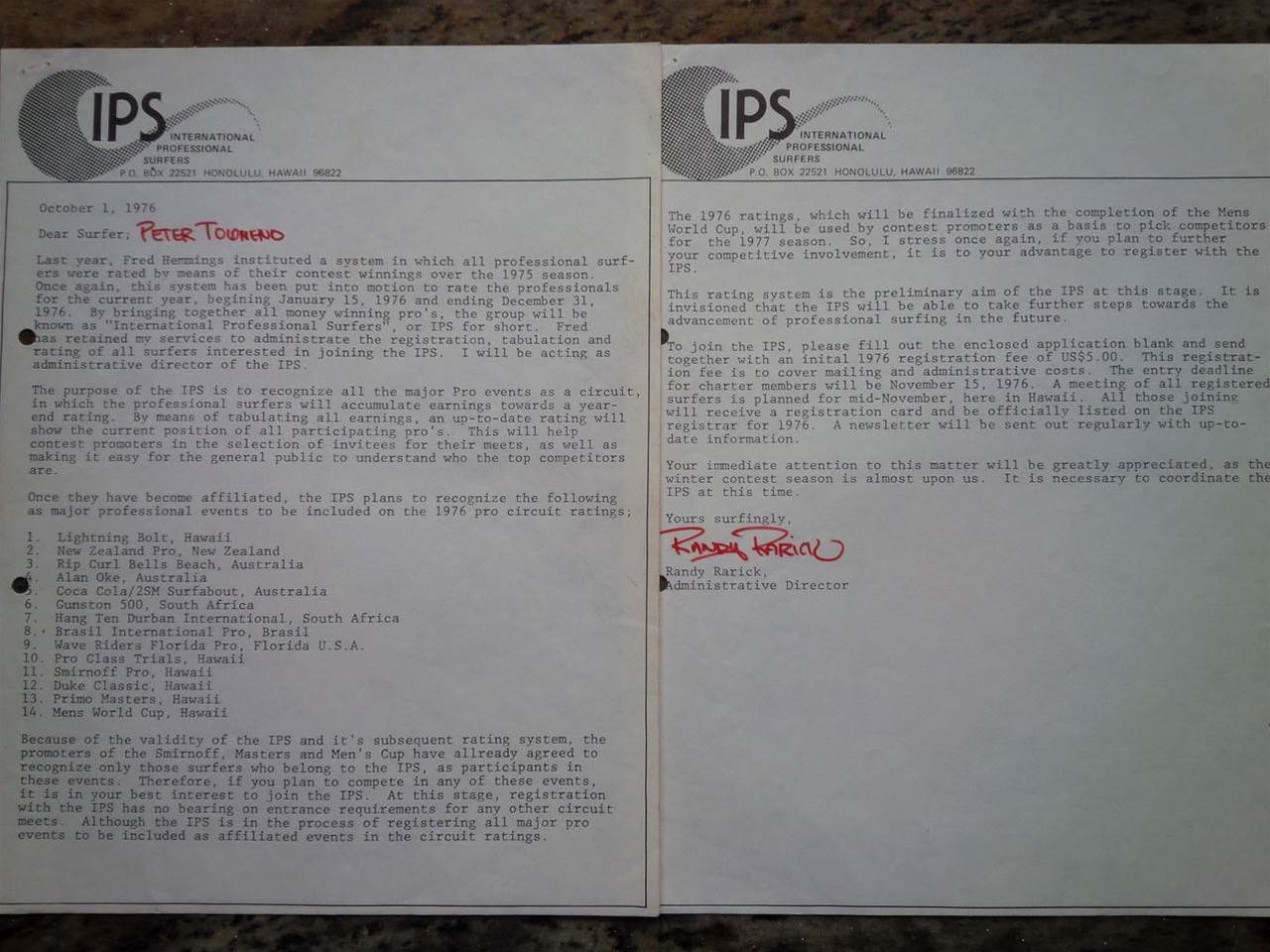
Yeah! We received the IPS World Tour announcement letter on October 1st, 1976.
Was it hard to transport boards back then?
Yeah! Well in those Seventies days we didn’t have the padded board bags of today, and most boards we were travelling with had glass on single-fins unless you had access to the Bahne Fins Unlimited fin boxes (we had them @ G&S), you’d build cardboard protectors to tape on the nose and tail and the fin, and we travelled pretty much with a quiver of three boards, and you’d put your best or favourite board in the middles to protect it.
Were you thinking about a board that would win the title when you worked with Parrish in Hawaii?
Well in the Seventies, Hawaii was such an important part of your surfing career and because we didn’t have access to the gun blanks that they had in the US, it also made it hard to shape your longer boards. In those days you accumulated a North Shore quiver that carried over from winter to winter, and I had been working with Tom Parrish for a number of winters prior to the ’76 winter and he had built me a few diamond-tails, as that is what I was shaping for myself since I had started shaping my own boards at Joe Larkin’s in 1971.
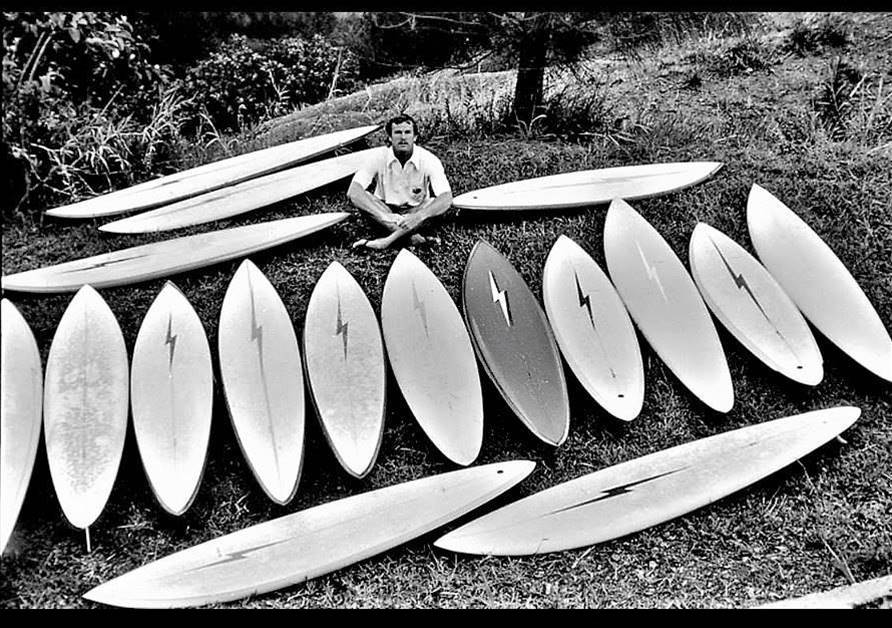
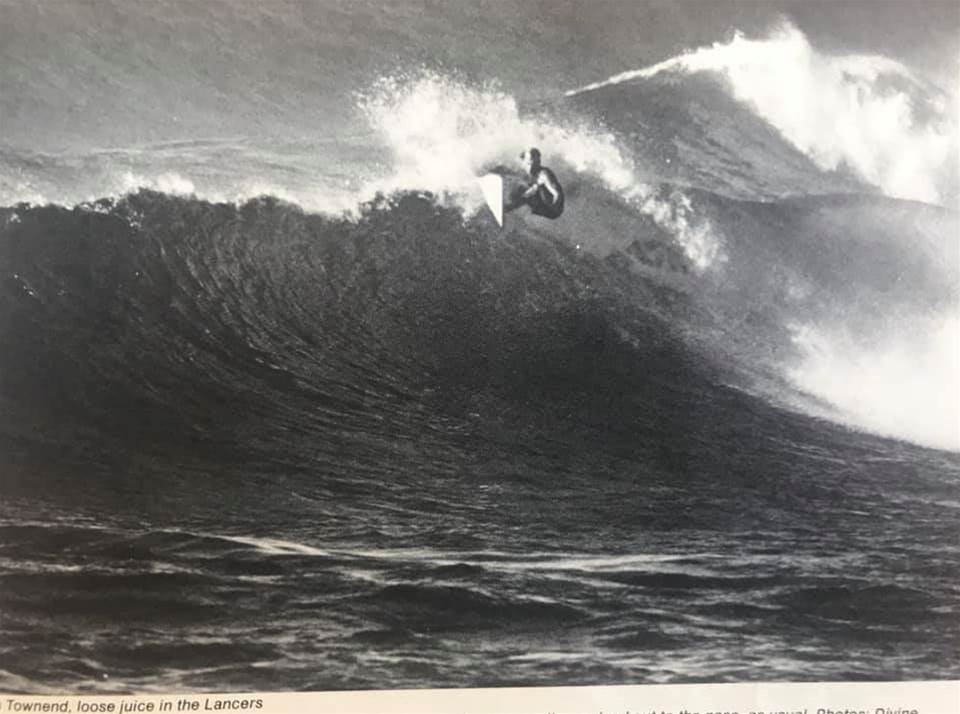
Tom had shaped me this 7’10 with the white Bolts that up to this point was the best board I’d had for the North Shore in the four seasons I’d already spent there. It just rode so responsive especially at Sunset and Haleiwa and was a key to ’76 winter success as I made three of the four finals that winter on that board, the Smirnoff, the Duke, missed the Pipe final by a place losing in the semi-finals and finally a second to Ian Cairns at the World Cup in pumping Haleiwa that would make me the first IPS World Pro Champion.
That Parrish was a beauty!
Do you remember any of the other dimensions?
The Parrish beauty with the white Bolts, 7’10 X 19 ½” X 3 1/8th thick with the wide point forward.
What was the logic behind the diamond tail?
My first diamond-tail was shaped by Brian “Fury” Austen at Joe Larkin’s in ’70 and I loved the feel, so when I shaped my first board the next year, a 6’1” diamond-tail that I took on my first Bells trip and got second to Simon Anderson in the Australian Junior Title, it became my go to tail design.
A lot of the guys were on Lightning Bolts I believe. Who else amongst your competitors?
Most of the travelling internationals were getting Lightning Bolts, which Jack Shipley provided for many of us on a return policy after he had our first couple made, and Bolt had an insane stable of shapers, Reno Abellira, Barry Kanaiaupuni, Tom Parrish and Gerry Lopez of course for boards for Pipe.
Did you have to battle for your board – as in there were lots of other orders and riders to compete with for Tom Parrish’s time? Did you hide your design or anything like that?
Tom was great with me as I was one of the first ones to go to him because of my friendship with Jeff Hakman, who was also working on boards with him early on, and they both lived up on Pupukea Heights where Tom’s shaping room was.That’s where the roots of the classic Parrish, North Shore board developed, plus Tom was a good surfer himself often out at Sunset with us.
Any vivid memories of a critical moment with one of the boards?
The one thing you prayed for is you didn’t break a “Beauty” ha!ha! Good North Shore boards were prized possessions.