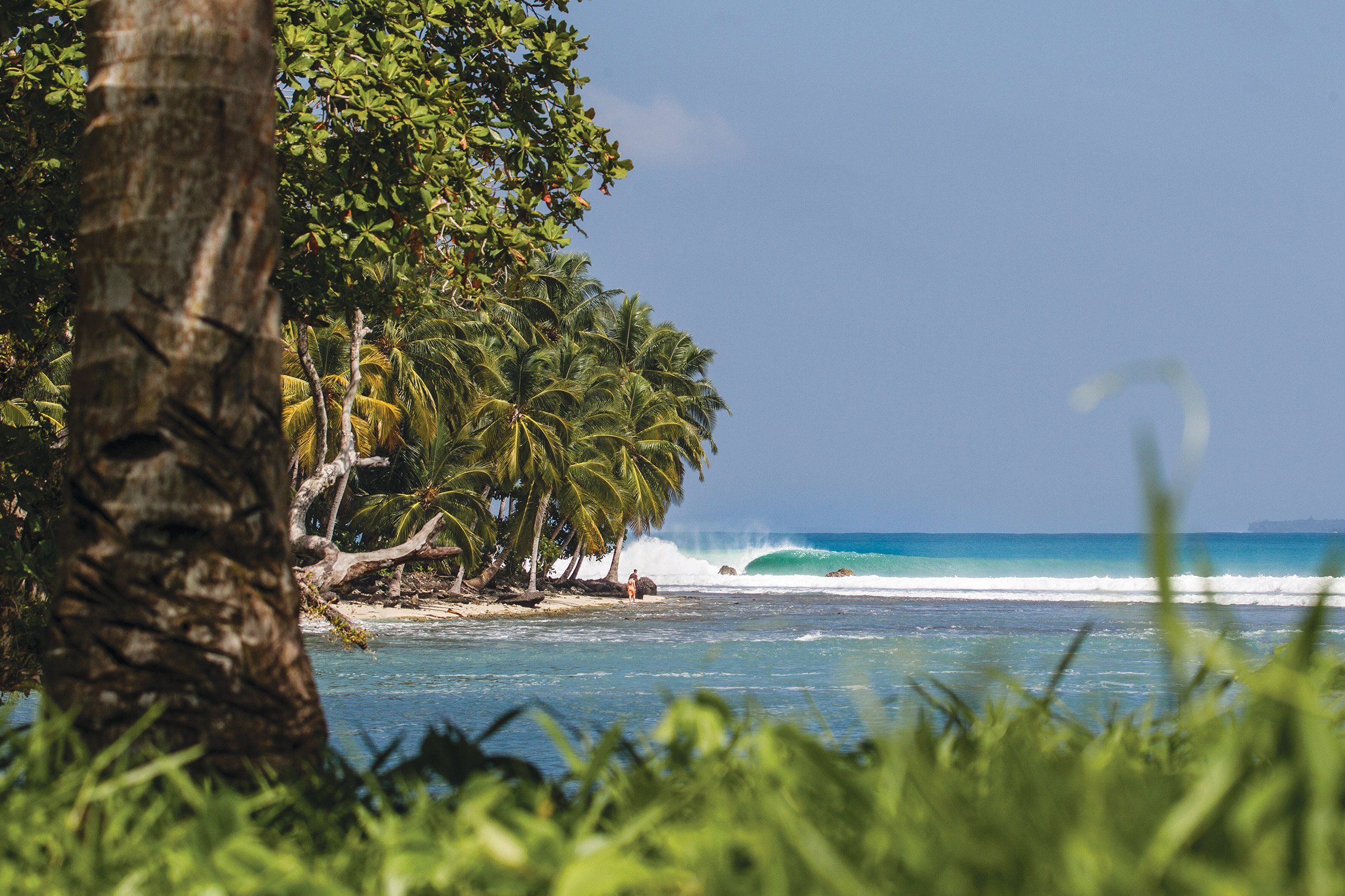
What if surf reefs and beaches could be granted the same kind of protective status as many of the planet’s land-based natural wonders?
Your favourite left-hander in Indo officially shielded from any kind of man-made threat; treated like hallowed ground in the same way Niagara Falls or the Grand Canyon is. Every effort made to give the natural environment primacy, whilst cultivating a cohesive relationship with social and economic forces.
Scott Atkinson, the senior director of Surf Conservation at Conservation International (one of the world’s largest conservation organisations) has spent the past five years trying to achieve the vision outlined above.
“So, our mission really is to protect world-class waves and vital marine ecosystem surrounding them.” Scott is talking to me via Zoom from his home in Hawaii, but much of his work centres around Indonesia. Scott initially went to Indonesia to work with endangered orangutans, but as he became increasingly interested with the Indonesian coast and the local fishing communities his energy shifted from tree-hanging primates to community-based near-shore conservation.
Somewhere along the way the surfing bug bit hard and Scott began to see a connection between his work in coastal protection and the goal of surfers to preserve and protect their waves.
Around 2018, he started collaborating with Save The Waves Coalition and this led him to create a Surf Conservation program at Conservation International, an initiative with a clear agenda. “Basically you create legally enforceable regulations around surf breaks, to protect the surrounding ecosystems as well as the breaks, for the benefit of people and nature,” explains Scott.
The initiative already boasts 23 established community-based ‘protected’ sites in Indonesia that were established in partnership with Save The Waves and Indonesia organisations, Konservasi Indonesia, and the Indonesian locally managed Marine Area Foundation. These protected areas are on Morotai, Sumba and the Biak islands and at least 20 more are in the pipeline. They’ve recently broadened their reach partnering with the World Surf League and local organisations to include other areas in Indonesia such as G-Land, Costa Rica, and Brazil. The plan is to expand to Peru and Fiji soon as well.
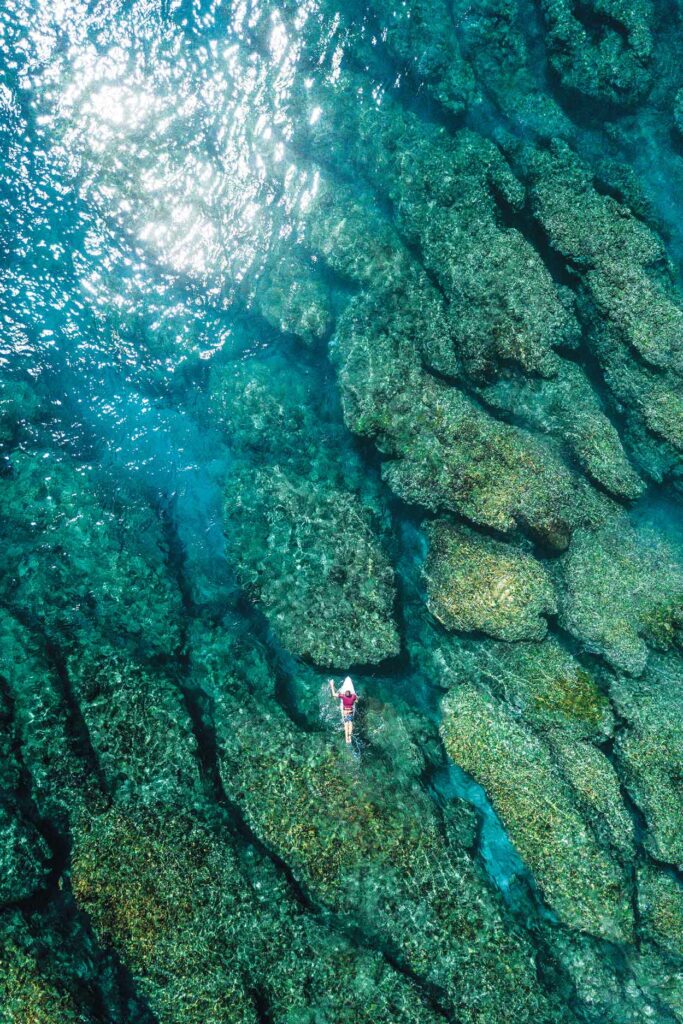
According to Scott, the key to effective surf conservation is working closely with local communities and their respective legal frameworks. It’s about empowering local surfing communities to preserve their natural environments and cultural values, and to prosper from the process.
“We do really emphasise that wherever possible it needs to be legal protection, we need to empower the local community members and the government so they can enforce these areas and really protect them,” explains Scott. “But as people start to benefit from an improved environment, which can include increased fish catch and opportunities for community-based tourism, they really start to become the strongest defenders. And I think that is the core of this; it starts with the community then builds the capacity of the community and the community carries it through. We’re just facilitators in the process.”
Scott is quick to explain that communities around the world have embraced the idea of conservation or sacred places for thousands of years. Often, Scott’s aim is to provide a modern reinforcement for an established tradition or custom that already places a high value on the environment.
“The Hawaiian people, for example, have always had the concept of Kapu,” he points out. People were never separate from nature but worked with nature and thrived.
So what kind of specific legal resolutions might the Surf Conservation program help usher in. Scott stresses that each community has its own, unique set of needs but mentions a few examples. Some communities chose to ban coral mining or sand mining, stop deforestation or cutting of mangroves or limit types of coastal development, things that basically keep the ecosystem intact…”
Scott is also the first to stress that Conservation International is not the only one at the dance when it comes to surf conservation and works closely alongside other organisations like the World Surf League and Save the Waves and their World Surfing Reserve Program to build on pre-existing protection measures.
Climate change and protecting high carbon ecosystems is a big factor as well. As Scott explains, if you look at a surf break as a key component of a broader ecosystem then there is typically a lot of carbon stored in coastal forests and mangroves that could be released if the environment is disrupted.
“Where you consider a wave and you look at everything around it, from the watershed, the low elevation forests, mangroves, seagrass, to the reef, even to the offshore –what influences the wave or what the wave could be affected by. Keeping that carbon in those places is so important. It’s already intact and we have done the research to show that there are thousands of locations with great surf and massive stores of carbon in those ecosystems.”
While Conservation International’s Surf program specialises in supporting local organisations and communities to protect ecosystems and push through relevant legislation, a goal beyond that is to help facilitate sustainable eco-tourism. Preservation of natural resources is a priority but Scott well-understands that tourism represents an important income channel for many of the communities he works with. Looking after local resources, like surf reefs, is also in the interest of the economy. Many modern travelers place a high value on pristine settings. If a location flourishes because it strives to protect its natural environmental then this in turns serves as a protection mechanism against destructive forces.
Scott emphasised that in the ideal scenario, tourists, and the money they spend, would contribute to the conservation goal. “Working with tourism is relatively new for us. And we’re excited about it. And we’re just really looking for those folks who find this compelling and would like to start to work with us. Basically, to provide a pathway for these resorts and for tourists when they’re visiting, to make a contribution to have something that will help to protect the environment and benefit the local people.”
So, returning to the original question of whether or not surf reefs and beaches can become protected sanctuaries, Scott points to the diving community as an example of a powerful interest group who has ushered in legal protection for dive sites around the world.
“Thirty-five million surfers (the approx. number globally) can make a difference if six-million divers already do,” he insists enthusiastically. After a conversation that touches on a number of related topics, I ask Scott if he can provide a simple and effective framework for protecting surf breaks and their surrounding ecosystems. He boils the process down to three key steps.
“The first one is stewardship,” he states. He explains that stewardship means having a critical mass of people who genuinely care about a natural asset, like a wave and the surrounding environment, and are willing to take action on its behalf. “The next is legal,” he continues.
As outlined above, legal support means working with existing legal frameworks to create protection. “Finally, economic and social benefits,” he urges. If you can use the preservation of an environmental asset to stimulate a local economy and provide social benefits for a community then its value is further increased.
“If you get those three key elements. I think, in almost any context, you’ll have long term conservation opportunity, and it’ll remain intact,” concludes Scott. So, next time you are in Indonesia or P.N.G or the Maldives, surrounded by natural wonders, pulling into glass-blown barrels over a reef that rushes by in a blur of brilliant colours, take a moment to think about preserving that experience for you and generations to come.