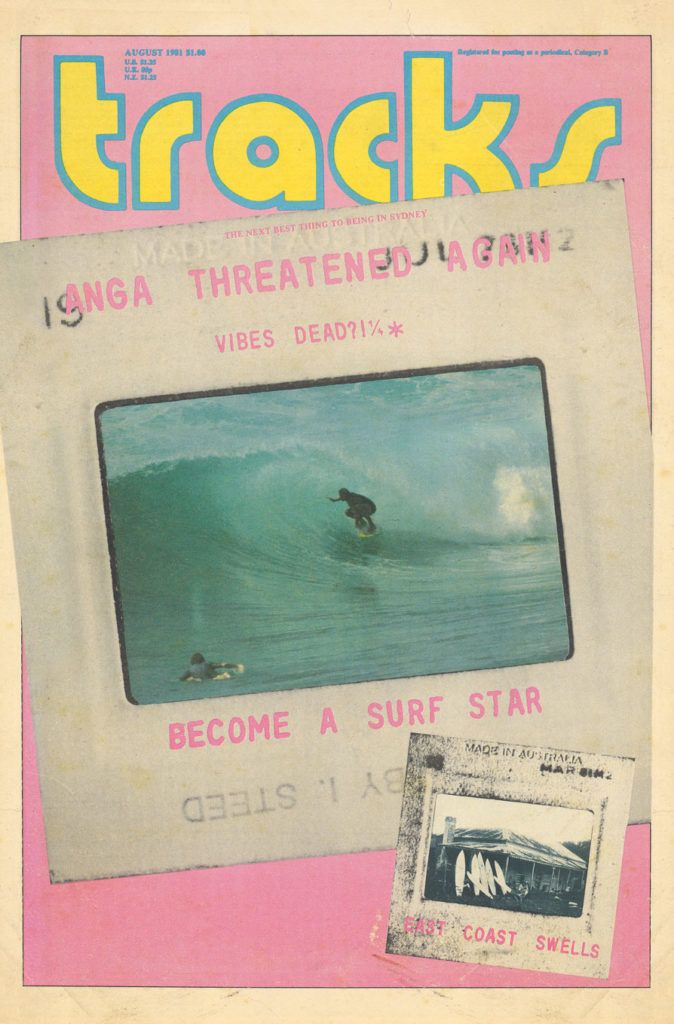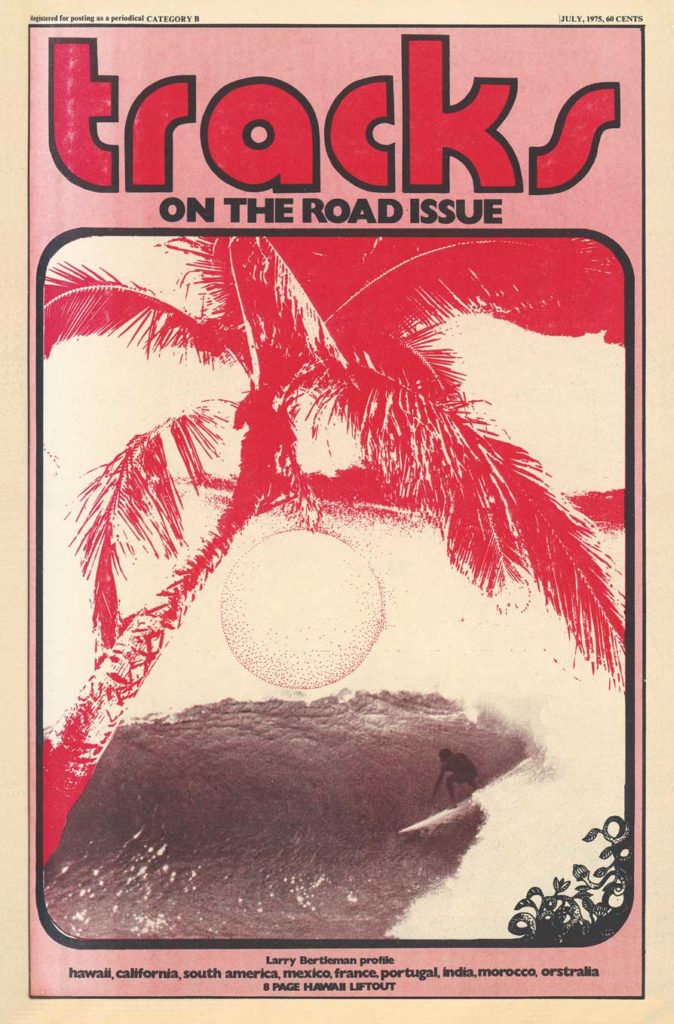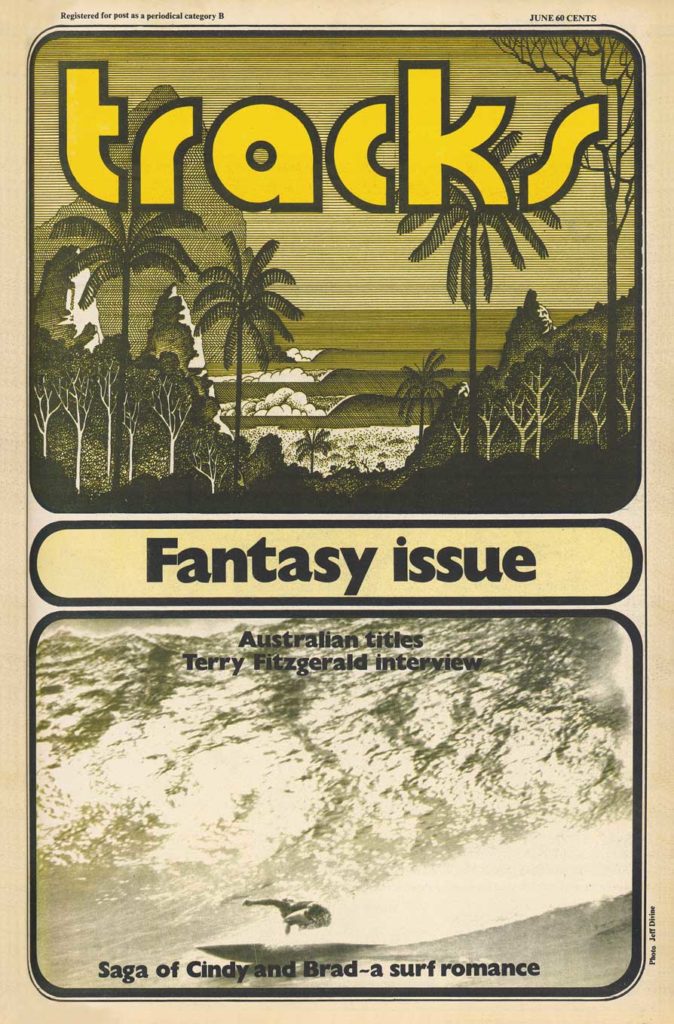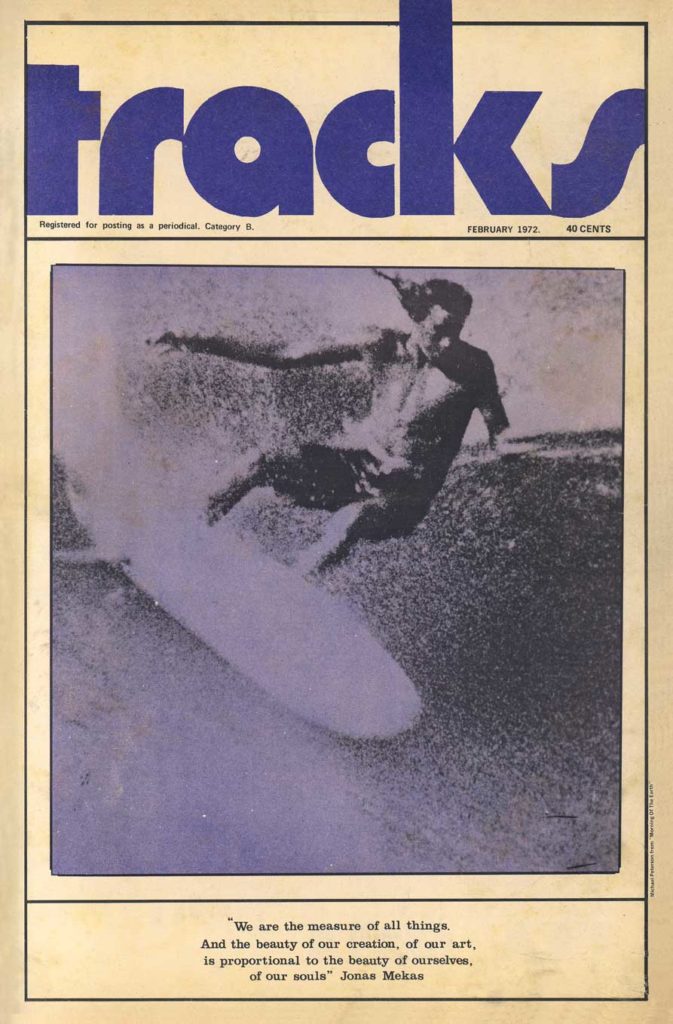

The surfing community is mourning the passing of Graham ‘Sid’ Cassidy. The journalist turned contest organiser/administrator played an instrumental role in building and shaping professional surfing as we know it. When Cassidy was executive director of the ASP in the late 80s and early 90s, he ushered in the tiered competition structure, which split the pro circuit into the WQS and WCT and ensured the pro circuit had a clear pathway for surfers pursuing the elite realm. Cassidy’s involvement with surfing contests stretches back to the late 60s when he first threw his hand up to raise funds for a fledgling competitive scene. The profile below by Phil Jarratt first appeared in the December 1977 issue of Tracks. It portrays Cassidy as someone who was deeply passionate about professional surfing while also wary that the contest scene might drag surfing too far from its free-spirited roots.
A Profile of Graham Cassidy
December 1977 Tracks, pages 16–17 — by Phil Jarratt
“Graham Cassidy fits surfing into his life like most people fit in sex. He does it early in the morning or late in the evening. Weekends he’ll often have a binge but when he’s on the platform at Cronulla Station on Monday morning waiting for the four-stop express to Central his secret obsession is as well hidden as his wax rash … He’s a career journalist with a wife and a kid, a house to pay off and a train to catch, and just why he spends so much of his time working his butt off for pro surfers escapes me.”
Graham Cassidy is packing his bags and going to live in London for two years. Do I hear you say, “So what?” Or worse, do I hear you say, “Who’s Graham Cassidy?” I hope not, but just in case I’d better point out that Graham (also known as Sid for reasons that date back to his Reyesby childhood) Cassidy is the man largely responsible for the Surfabout contest, the Australian Professional Surfers Association and the trend for prominent surfers to act like human beings these days. In short Cassidy has done more than most to get surfing organised in this country. You can love him or hate him for that but the truth of the matter is that without him professional surfing in Australia would still be back in the dark ages.
Cassidy first started making waves for surfing back in the ’60s when the surfing columnist at Sydney’s Sun newspaper looked at where surfing was headed and joined the priesthood.
Cassidy climbed out of the woodwork in the cadet reporters room and started to write a column that made sense to surfers. By the early ’70s he’d established himself as one of the few representatives of the straight press who knew that a cutback wasn’t only a way to save money. Then in 1972 he wrote a story that mightn’t have been too gonzo in style but turned out to be a classic piece of New Journalism. The story told how professionalism was poised to enter surfing and how 1973 would see big money pro contests springing up all over the land. This, of course, was nonsense but Cassidy sat back down at his desk and waited for the phone to start jumping up and down with company executives trying to get in on the act. He didn’t have to wait long.

“It was like telepathy,” says Cassidy, sipping a lunch time beer. “It’s nice to be in that sort of powerful position where you can visualise what might happen and turn it into a positive idea. I was trying to plant the idea in the mind of some sponsor out there in the blue yonder and I was successful.” First to the phone was a man from the Coca Cola company who pleaded with Cassidy to tell him more about these amazing new developments in surfing. Satisfied that a professional surfing contest would be a worthwhile endeavour, the man then asked Cassidy who he thought would be the best person to organise it. The mild mannered reporter blushed and suggested himself.
The 2SM/Coca Cola Bottlers Surfabout was formulated during 1973 and became a reality in May, 1974. It was then, and still is, the richest surfing contest in the world and it was revolutionary in style and concept, but it had been a long, hard road for Cassidy to get it from the drawing board to the beach. “With Coke and 2SM we had two companies who were extremely cautious about where they put their money,” he says now. “They had to be. I mean they’re multi-million dollar concerns and one slip could really stuff them up. And there were people in both companies who were well-versed in all the old myths about surfing. They never said much to me about it but I could see that in the early stages there were some worries about their corporate images being tainted by surfing. I had to sell them on surfing’s new image. Once they realised they weren’t dealing with riff raff we had it made.”
Selling the new image involved changing the attitudes of some of the would-be pro surfers. Says Cassidy: “We had instances where you’d line up a television interview for some surfers and just hope to God that the television crew would show up. You’d never dream that the surfers wouldn’t take the opportunity to publicise themselves but back in those days that’s what used to happen. The problem was getting them to think positively about the rewards of being real professionals.”
That first Surfabout enjoyed the best waves in its four-year history and surfers, sponsors, and spectators finished the week stoked. The experience also taught Cassidy a valuable lesson in dealing with his surfer competitors. “We’d taken the contest to Fairy Bower but the wind was onshore, it was pissing with rain and everyone wanted to call it off for the day. I was sitting with Nat Young watching the surf in the rain and he said: ‘If you call this contest off I’ll thump your bloody head in.’ He was smiling but Nat’s six feet four with butchers hands to boot and I feel that any advice he offers is worth considering, so I decided to run it. The sun came out and the waves got good and ever since then I’ve made it a policy to make my decisions as quickly as I can and stick by them.”
The following year Cassidy’s decision-making didn’t turn out so well. The contest had been dragging out a bit with poor waves and he was anxious to get it moving again. After consultation with head judge Geoff Luton he decided to run a second round at Narrabeen even though the waves were starting to deteriorate. The first heat went in and Peter Townend surfed brilliantly to shoot 20 points up the scoreboard. Then, halfway through the second heat the wind swung onshore and the surf turned to garbage. “It was too bad to go on with the thing. It would have been totally unfair to the surfers in the later heats but it was a bloody tough decision to make, knowing how a cancellation would affect PT and the other guys who’d scored high points. PT wouldn’t talk to me for the rest of the day but the next morning it was business as usual.”
While Cassidy found that he had a successful contest on his hands, he also found that surfing’s new professionalism was not universally acceptable. “There were two attitudes,” he says. “The professional surfers thought it was the greatest thing since sliced bread and the anti-commercialism crew did a bit of badmouthing. I got bad-vibed myself quite a bit, but not as much as PT did. I anticipated it because I went out of my way to explain what it all meant and to promote the rewards that it would bring to the sport. And I’ve always taken a fairly casual approach to the whole thing because deep in my subconscious I have this reluctance to be part of competitive surfing. I think I’m like any rank and file surfer who goes surfing because he loves it. I’m racked with these fears and worries that what I’m doing is going to take away from surfing the virtues that first attracted me, and I’ve always been in two minds about my dual roles in surfing.”
Plagued by such doubts, why then did Cassidy devote so much time and energy to his cute little two-headed monster? “Well, Geoff Luton and I originally saw it as something of a duty. I saw positive things emerging from the contest, a swinging over of the general public and getting them to understand the ethos of surfing. And at the same time I saw it as a way to give surfing a bit of bureaucratic muscle for the times when it needed it. We never went into it with a view to making heaps of money. We wanted to promote surfing so we didn’t ask for much. Our fees have always taken a back seat to prize money. Look, in sports promotion prize money is the be-all and end-all. As far as the media goes the money that’s up for grabs is the whole thing and you’ve gotta present a package that the media will want to know about. We wanted to call it the richest surfing event in the world and we found that you couldn’t do that and be the richest promoter in the world too. The day will come when that’ll be the case, of course. Surfing contests all over the world have never been marketed properly but I think that’s starting to change. Sponsors are getting more grandiose about promoting their events and as that happens the people who do those jobs will be paid more.” There is an interesting parallel between Cassidy and Hawaiian contest promoter Fred Hemmings. Cassidy has organised the Surfabout for four years for a relatively paltry sum and the prize money has gone up in leaps and bounds. Hemmings takes 35 percent of the total cost to the sponsor and the purses for his contests have remained stagnant. In Sydney at the moment a professional sporting promoter is shopping a surfing contest around for 1978. He wants $20,000 to do the job. Cassidy thinks that figure is “not as preposterous as it sounds” but it’s a bloody sight more than he’s made from putting four contests on. The point is not so much that Cassidy has been getting ripped off (he’d deny that until the cows come home) but that he does genuinely see the job as a duty to surfing.
Cassidy’s work for the Australian Professional Surfers Association has been another labour of love, or, as he sees it “something that needed doing and there was no-one else around to do it.” He set up the Association with Doug Warbrick in 1976 but probably took more of an overview of its aims. “I regarded it as bloody essential not only for the pros but for all surfers. It projects an image of authenticity and responsibility and it’s something the media can turn to when the need arises. If a council or a government decides to do something detrimental to surfing — like take away a surfing area or ban a certain type of fin — we can take concerted action to overturn it, to give the public the other side of the story.” Be that as it may, it would not have been too surprising to find that not many recreational surfers were active in their support for the Association. But what has stunned Cassidy is the apathy of the people who stand to gain most from it, the professionals themselves. “Some of them aren’t a pro’s bootlace,” he says. “All they want to do is make a bit of money out of it so they can go surfing all the time, and you can’t argue with that. We all want to go surfing 24 hours a day, but the point is that these guys are living in the past. They’re thinking in terms of 1964 when the whole thing was a lot more casual but I’m encouraged by the number who are starting to come around. They’re starting to get a little more sophisticated in their approach.”
Much of Cassidy’s work for the APSA has revolved around attracting new sponsorship for surfing, but here again he’s had his share of disappointments. “I’m not pessimistic about the future of pro surfing but my aspirations for it have levelled out a lot. I think that 1978 will be a bigger year than this one but those huge sums that we thought would be there haven’t materialised yet. One of the problems has been that surfing has such a young appeal. Beer and cigarette companies are in a pretty sensitive position at the moment with government reports claiming that they shouldn’t be allowed to sponsor sport and I think they feel they might bring the matter to the boil if they put money into surfing. Then on the other hand we’ve still got the problem of a lot of companies thinking in terms of surfing’s old roughnut image. They just don’t realise how much the sport has changed.”
As I said at the beginning of this obituary Graham Cassidy is going to London for two years. He’s taking along a triple-thickness Rip Curl with hood and booties but his duties as Sun London bureau chief will probably keep him out of the surfing mainstream for the duration. As we finished up our last beers (sob) I asked him which changes in surfing had pleased him the most. “The intelligent attitude to the job that a lot of the pros are starting to take. They seem prepared to put their old surfing ways aside and come up with a character and picture which is acceptable to the public.”
And then I asked him what displeased him the most. On this subject Cassidy was as vitriolic as he was verbose. “Nothing shits me more than those arseholes who are exploiting the whole surf, sun and sand ethos and exploiting our champion surfers to sell their own products. They won’t put a bloody razoo back into surfing. I just bought a television a while ago and I’ve been amazed. I didn’t realise how far it has gone, this screwing every ounce of value out of surfing and not putting a cent back. The other night in the space of an hour I saw three surfing ads for soft drinks, one for a deodorant, one for a new model car, one for beach gear, one for a bank and one for some bloody esoteric mob that had nothing to do with surfing at all. You know the routine, they get old surfing footage for a song and just go for it. Some of these companies doing it are the same ones we’ve approached to put some bucks — not big money — into the sport and all we get is the big arse. We’re hindered by the fact that we’re a young sport and we’ve never had a united front. We’ve always been seen as a good mark for a ripoff. I mean it’s all right for surfing to be personal and individual to a large extent but the upshot of it is that people can walk in and take what they want without surfing reaping the benefits. It doesn’t affect Johnny Cutback out there watching his TV. He’s stoked to see surfing in the ads. But what’s happening is that surfing is being undermined and exploited.”
With that Australian surfing’s most energetic servant jumped on a London-bound plane, leaving Johnny Cutback and the rest of us to our own devices.