By the 1960s surf culture was thriving in in post-war California and eager Boardriders were desperate to ride more waves in the cool waters of the west coast. The heavy, full-length dive suits that already existed were like straight jackets, so stiff you needed talcum powder to pull them on and nigh impossible to surf in.
Jack O’Neill came up with a simple solution – chop the arms and legs off to make the ‘shorty’ or the spring suit as it became known. The logic was straight-forward; a rubber skin over the torso kept the vital organs warm while leaving the lower arms and legs free to paddle and bend. O’Neill eventually developed full-length steamers that were flexible enough to surf in, but the spring suit was the first wetsuit customised for surfers.
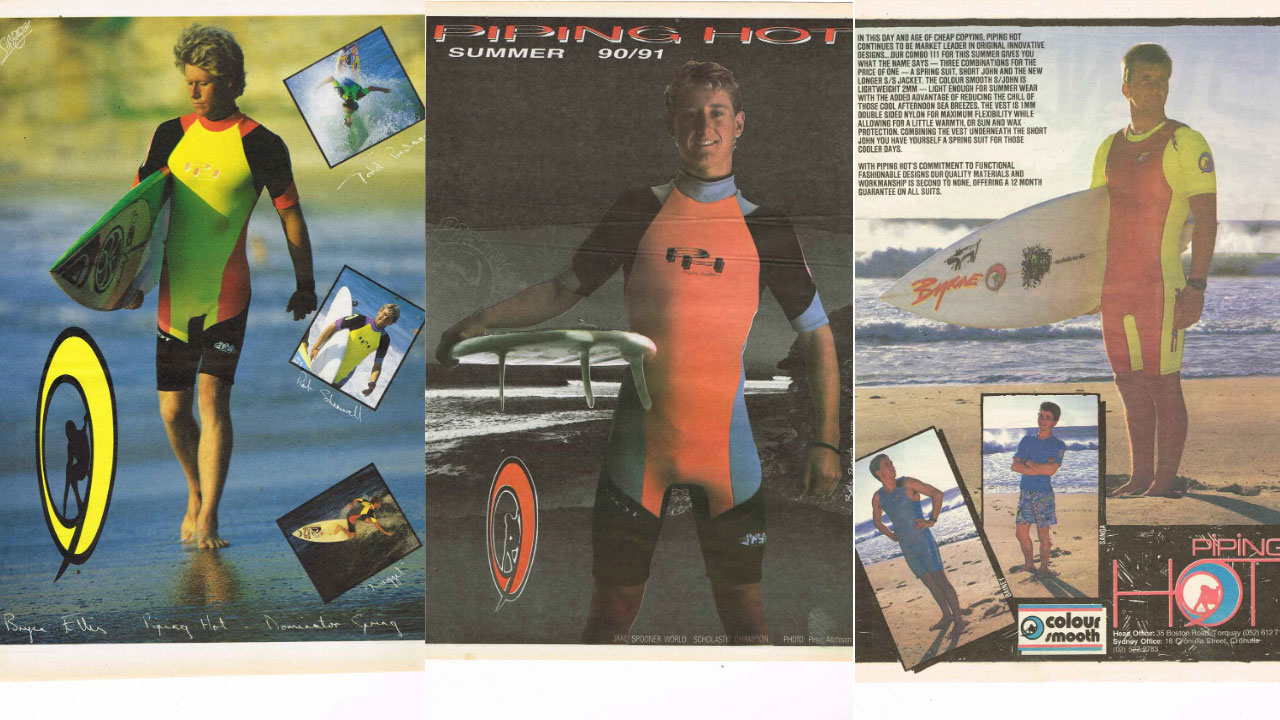
Over the decades the ‘springy’ has been tweaked hundreds of different ways by wetsuit companies. In the 80s and 90s it was often released as a kind of statement piece, featuring flamboyant colours and patterns – the brighter the better.
These days the designs tend to be a little more subdued, but the technology gets better every year. The springy remains a staple part of the surfing wardrobe, whether it’s worn in the classic short-leg, short-arm style or the slightly snugger, long-arm springy.
Scroll down for a look at how the spring suit has evolved over the years. What’s your favourite?