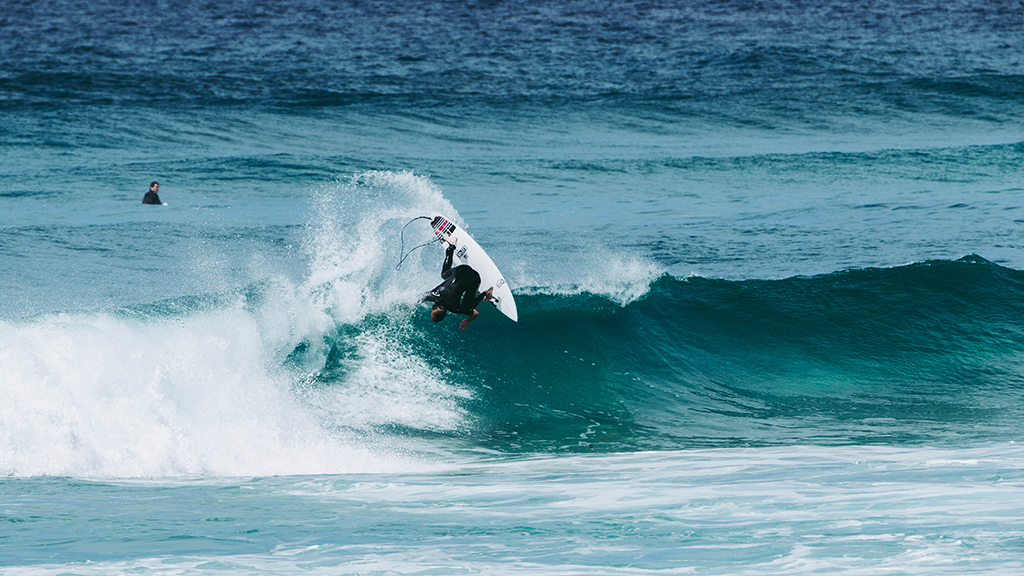
MADE IN TAIWAN

Last November I found myself inside an ornate temple in regional Taitung, on Taiwan’s east coast. Head bowed, hands clasped, I sought a direct line with the gods. New to Taiwan, new to temples, new to prayer, I only hoped I wasn’t setting back my cause. Specifically, I was angling for a thumping big typhoon to send overhead waves and offshores howling in my direction. It was an appeal that probably ran contrary to the wishes of the local fishing and insurance industries but I was willing to give it a go. Everyone I’d met so far in Taiwan had been very accommodating and the temple was devoted to the Goddess of the Sea. I figured if anyone could rustle up a four-footer it would be Mazu. For three days I’d been taking in the amazing scenery, eating delicious steamed wontons and dodging monsoonal rains. Travelling solo and utilising local guidesI’d found fun waves in protected bays and had seen enough set ups to be jazzedon the potential. Normally I defer to meteorologists for swell checks but itfelt somehow right to be going through celestial channels. Taiwan is busy with gods. No one knows how many exactly but the figure of 36,000 is sometimes casually thrown around. Buddhism, Taoism and Confucianism are all well represented, as are more ancient and localised idols. Not all are gods as such – some are more like saints, ghost or spirits. Many were once mortals who were elevated to religious icon status after they did something unscientific and totally awesome. Like Mazu. The Sea Goddess Mazu is Taiwan’s most popular deity. She crushed it Beyoncé-style back in the tenth century. A precocious shamaness with the ability to read the future, exorcize demons, dance up a literal storm; she could shape shift and astral travel. Mazu is said to roam the seas protecting sailors and fisher folk through miraculous acts. In a famous legend she saves her brothers from a typhoon while in a deep trance and weaving. So a multi- tasker as well. Some seafarers still carry shrines to Mazu today. In fact, of the 1500 temples in 26 countries devoted to Mazu around the world two thirds of them are in Taiwan. And what’s really interesting is that their numbers have doubled since 1980 and multiplied by a factor of 12 since 1911. In other words, despite being a thoroughly modern country Taiwan … Read more